Uncategorized

My Mom Was a Billionaire

Here’s what that taught me

I’m the target of good-natured ribbing in my upper-middle-class New Jersey suburb for my spending habits. My wife’s friends told her they’ll pass on going on vacation with us because I’m too cheap and would probably take a bus from the airport, pack sandwiches, and stay at budget hotels.

Guilty as charged. That’s in part because both my mom and dad spent money like there was no tomorrow when they were kids. They had to–there was no time to waste. 

Without running water or medicine, hardly any food or clothing, and her father murdered by the Nazis, my mom was the poorer of my parents, but she managed to save a little bit of money in 1946, the year she turned five, to buy herself some candy. The banknote she had probably made her a local currency billionaire, yet it was literally worth less than the paper it was printed on by the time she was ready to spend it. My grandmother didn’t have the heart to tell her. With both of his parents still alive and the wisdom of being a decade older, my dad had a few more zeros on his net worth–not that it mattered much.

That was the insane reality in postwar Hungary. From time-to-time I’ve quizzed my colleagues in finance or journalism about which country had the highest inflation in history. They almost always guess Weimar Germany, Brazil, Zimbabwe, or, occasionally, early 1990s Yugoslavia. Nope.

In that fateful year Hungary’s inflation rate hit 41,900,000,000,000,000%. Not a year—a month. At the peak it took about 15 hours for prices to double. I once asked my grandmother how often she was paid and what she did with the money. Couldn’t she just throw it out the window on her lunch break for someone to buy groceries with it before they changed prices on her way home? She just smiled and shrugged. Nobody really wanted to hang on to cash so the main value of her job was that they fed her. She said that if you really needed medicine then the only way to get it was if you had a little bit of gold, which she didn’t.

Here’s the sort of thing my mom might have had in her pocket–a billion pengő–though maybe it was just 10 million, or a million or a thousand, depending on exactly what month she set it aside. (Milliárd=billion in Hungarian).
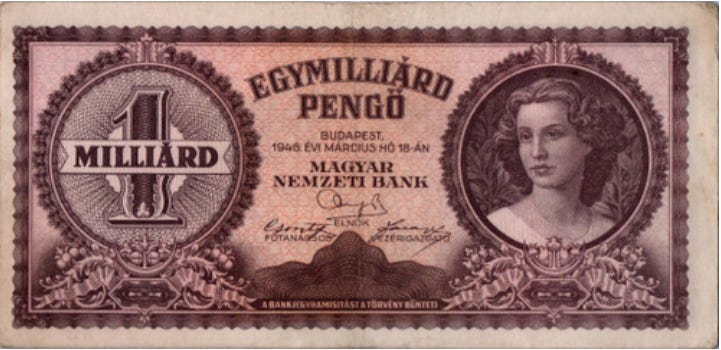
To keep things somewhat manageable, and to save scarce paper, old bills were printed over and reissued in denominations with nine zeros removed–the millpengő. That only lasted for several weeks, so then came the billpengő. (Billió=trillion).

Three months after the above bill was produced, the government printed, but never issued, a sextillion pengő note (one followed by 21 zeros). Then they gave up and scrapped the currency entirely, introducing the forint and making every pengő legally worthless. (I have almost the full collection of banknotes at home, but unfortunately not the rare specimen below, which is worth about $7,000 today to a collector).
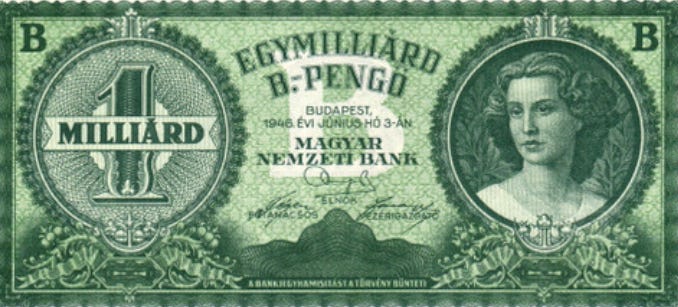
Lots of people have parents who grew up poor. It usually makes you a bit frugal–no bad thing in moderation, though sometimes people don’t want to take trips with you 😢. But having almost no money and seeing money cease to have meaning are two entirely different things. To me, at least, those stories make any level of wealth or savings seem ephemeral.

It’s hard to imagine that in a country as blessed as the United States, the issuer of the world’s reserve currency. We have an “exorbitant privilege” compared with people whose wealth, salary, and future pensions are denominated in rubles, bolívars, dirhams, ringgits, pesos, reais, or, sadly, forints. Everything from the cars in our driveways to the appliances in our homes and smartphones in our pockets are more-likely-than-not procured from industrious foreigners who gladly accept electronic bits and bytes representing dollars. Since we don’t have as many useful things to sell them, the surplus is recycled into our financial system. Trillions of dollars are parked in Treasury bills, notes, and bonds earning hundreds of billions in interest annually. With a budget deficit of $1.8 trillion last fiscal year–the second biggest ever–the interest is effectively deferred, with no anxiety about it being paid.

You can read plenty of clickbait nonsense on the internet from doom-mongers comparing America’s fiscal future to Weimar Germany or Zimbabwe (they would cite Hungary if they or their readers were more aware of history). Things would have to go very, very wrong for that to happen.

But we certainly could get a whiff of it. I’m surprised how little my educated friends and neighbors question the solidity of our currency. It’s just a construct, backed by nothing but faith in America’s centrality to the world economy, the wisdom of its leaders, and its military might. 

My wife and I had dinner this past weekend with two couples who also just shipped their youngest child off to college this year. The conversation soon turned from roommates and majors to the next exciting stage in our lives after becoming empty-nesters: retirement. One dad is old enough to have started collecting Social Security. While he could have gotten more if he had waited longer, I pointed out that it probably made sense to start taking it now because the retirement trust fund could be depleted in nine years. That was news to him and the others, but it was sort of like someone telling them the sun will one day consume the earth in a supernova–the sort of weird, theoretical thing they expect to hear from the nerdy finance guy they know, not an actual concern.

One reason most people aware of that projection by the government’s actuaries also don’t take it seriously is that they assume the federal government will step in and cover any projected shortfall. Paid for with what, though? Even on the outright panglossian projections of the Congressional Budget Office, which foresees no recessions, wars, or crises ever, Social Security, Medicare, and other mandatory outlays will be more than $6 trillion in 2033.

Meanwhile, debt held by the public will have doubled by that year to almost $50 trillion on those benign assumptions, and just the annual interest bill is projected at $1.6 trillion. Yet the model concludes that sane people will lend Uncle Sam the money to cover that interest due plus a deficit approaching $3 trillion for just 3.5% a year. That’s less than the yield on any Treasury bill, note, or bond being sold today.

So will politicians double payroll taxes on people still working or tell retirees that they’re out of luck and that they need to accept a third less each month? Probably neither, but you might not love the alternative. It’s something not totally unlike what Hungary was forced to do in 1945 and 1946. While the economy won’t be in ruins (I hope), the U.S. has an active central bank, borrows in its own currency, and does have a printing press. They don’t even need to worry about issuing banknotes any more because money is mostly electronic. Buying bonds and keeping interest rates artificially below inflation, dubbed “financial repression,” is one indirect way of doing this.

Is that outlandish? Between the prospect of doubling or tripling taxes, what would you expect Washington to do? Taking a step so likely to spur inflation is in-and-of-itself a form of taxation and is dubbed “the cruelest tax” because it raises money from people who live on a fixed income.

Before you pore over the actuaries’ report about Social Security, that might not be the thing that breaks. A war, a financial crash, or another pandemic could all push us close to the precipice. Or it could be that the scales fall from our creditors’ eyes one day and interest rates start to rise on their own, forcing the Federal Reserve’s hand. There is some speculation that the moment is nigh, though that has been predicted prematurely many, many times.

None of this remotely means the dollar will go the way of the pengő, but seeing our savings lose a third or a half of their real purchasing power would be pretty lousy. I started off this note telling you how annoyingly frugal I am. If my fears about the fragility of our currency are justified then I’m doing the exact wrong thing. I should be living it up and accumulating possessions instead of saving as much as I can. 

If you see a new car in my driveway or hear that I’ve been flying business class and staying at The Four Seasons, that might be why. After all, I’m the child of billionaires.

Uncategorized

Goodbye, Yellow Brick Road?

“Don’t fight the Fed” is one of the oldest and best-known nuggets of investing wisdom out there, but do people really understand it?

I have my doubts. Coined more than 50 years ago by the late, great Martin Zweig, who warned investors to be cautious ahead of the October 1987 stock market crash, it basically means that, when the world’s most powerful central bank puts its finger on the scale, you would be wise to be on the same side. Buy when policy is loose, be cautious when it is restrictive.

But something can go from being a novel and useful insight about markets in 1970 to such a piece of conventional wisdom in 2024 that it is best ignored. You might even want to bet the other way by taking some chips off of the table. (Hey, you’re something from the publisher of “The Hungarian Contrarian”–what were you expecting?).

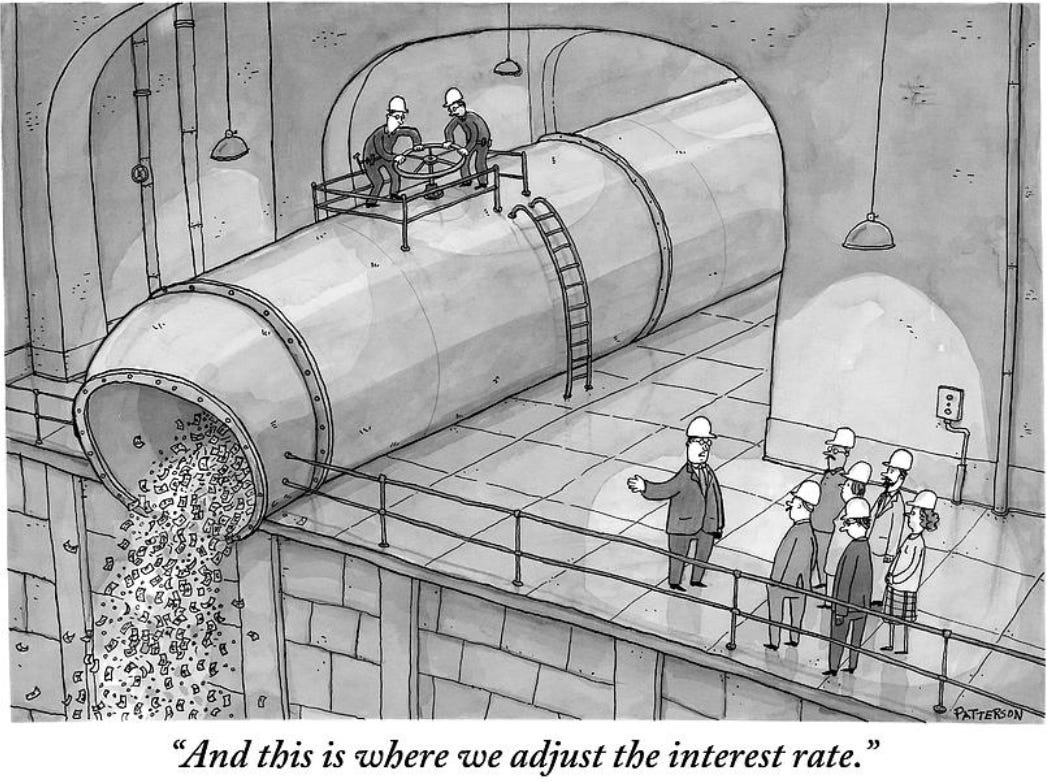
My column this weekend made that point by comparing the faith people have in Jerome Powell sending stocks soaring to new highs to the blind belief Dorothy and her companions initially had in the Wizard of Oz. There was initial excitement in the market, but, as has been the case the last couple of times a bull market was long in the tooth, the market might soon conclude that the man behind the monetary curtain frantically pulling levers isn’t really so “great and powerful.”

Back in Zweig’s heyday the Fed just had to lean in a certain direction to make markets move and individual investors weren’t parsing every word. For 25 years now–ever since the Fed opened the spigots to save the financial system following hedge fund Long Term Capital Management’s collapse–it has repeatedly ridden to the rescue in an increasingly aggressive fashion. That has reinforced the expectation that whatever leads the Fed to be concerned enough about the economy that it might cut rates, or stop raising them, is great for stocks. Once upon a time a disappointing report on the labor market was unequivocally bad news. Now it often sends stocks rallying. When cause and effect are that muddied it should give investors pause.

Why? For one, monetary policy isn’t some sort of magic wand. It takes quite a while to filter through to companies and individuals and to have an actual effect on corporate profits. If the economy is already weakening and valuations high at the outset then the start of a cutting cycle can be a massive head fake.

From my column:

Take the start of the rate-cutting cycle in 2007—one that coincidentally began on the same day of the year, the same starting federal-funds rate, and was for an identical amount, half a percent (50 basis points)—as Wednesday’s move. The effect was electric: The Dow Jones Industrial Average had its largest gain in more than four years, rising 336 points, the equivalent of about 1,000 points today. Lehman Brothers shares were among the top performers, surging 10%.

But, as we know now, stocks were just three weeks from their bull-market peak, a recession would begin in January 2008, and Lehman would collapse less than a year later in the largest-ever U.S. bankruptcy. By that time, the Fed had cut rates six more times—moves of 25, 25, 75, 50, 75 and 25 basis points, in that order. The moves took rates to 2%, their lowest in nearly four years. In the two months following the Lehman panic, the Fed made three more steep cuts, slashing rates to zero (technically a range of 0% to 0.25%) for the first time ever.

Stocks surged then too, with the benchmark S&P 500 jumping 4.7%. The Dow’s gain of 360 points would be nearly 1,700 today. Yet they erased all of that day’s rally in less than a week and would go on to shed another quarter of their value before bottoming in March 2009.

To be clear, the conditions that existed during the housing crisis were extreme, sparking the worst U.S. economic downturn since the Great Depression. Extreme events are by definition rare, and most predictions of doom are false alarms. More money is lost bracing for bear markets than in them, even when they really happen.

Will history repeat? That’s doubtful–the conditions back then were extreme. The housing crisis sparked the worst U.S. economic downturn since the Great Depression. There are plenty of excesses now, but only limited signs that the economy might be headed for a recession at the moment. But starting valuations matter and, based on reliable long-term measures, stocks are more expensive than they have been more than 95% of the time over 150 years of history. They also have returned more than 35% since the Fed began to raise rates. 

A few readers took my column as doom-mongering. It isn’t. I’m trying to puncture a silly narrative that a handful of people in Washington can take a decision that sends stocks soaring from all-time highs. That isn’t their job and, even if it were, they wouldn’t have the power to make stocks rise in perpetuity. The market’s initial rally means nothing. If life were that simple then recessions and bear markets would barely ever happen. In the past century alone there have been 17 and 22 of them, respectively. The Fed has existed during that entire period.

Don’t fight the Fed, but don’t speculate on stocks at record highs because you think it’ll bail you out either.

finance

Big Purchases Go Wrong Sometimes—Deal With It

Your anxiety is someone’s profit margin

I was reminded recently of how expensive a bit of nervousness can be when combined with clever marketing (screenshot below). My youngest son is off to college in a month, which makes his mom and me proud, excited, and just a little weepy. It also leaves us poorer–the cost of college is no joke! I may actually have to charge for my blatherings in this newsletter some day.

We went into it with eyes wide open and will be fine, but any large expenditure tends to make people anxious. I distinctly remember one of my closest friends calling me the night before signing the papers to buy his house in London to ask if it was normal that it worried him more than getting married or having kids.

Yes, he’s normal (well, in that respect). I was about a year ahead of him on all three major life events and felt exactly the same way about it–like I was some sort of sociopath. We humans spent 99% of our existence as hunter gatherers or in subsistence agriculture. Instead of catching a gazelle, we bring home a paycheck and try to save some of it. Money is the stored-up fruit of our labor. It confers social status and also ensures survival since we’ll depend on it to sustain us and our families one day.

By parting with a chunk of it all at once, or borrowing and pre-spending our future wages, we’re getting something we value at least that much but also bothered by what feels like a mortal risk. Whether it’s a physical object like a $900 iPhone or an experience like the $90,000 annual sticker price for some elite colleges these days, bad things occasionally happen. You might crack your screen as soon as you enter your contacts into your phone or your kid could drop out a few months into what should be four fun-filled years, missing out on a prestigious degree.

But we overestimate the actual benefits of hedging against bad stuff happening after a big financial commitment–and not by a little. That supports businesses worth billions of dollars a year. Literally a day after our payment cleared for my son’s yet-to-begin first semester, we got this:

His college, and it seems pretty much every other private and public institution in the U.S that I looked up, has “partnered with” – that’s the language they all use – companies like A.W.G. Dewar and GradGuard that are backed by larger insurers, including AXA. This is the 3rd prompt I’ve received to consider signing up for a specific insurer’s product, with their emphasis in bold, so I assume it confers some financial benefit to the university.

In the case of my son’s college, a refund for 75% of tuition, room, and board costs $676 per semester. It is “meant to safeguard your financial commitment.”

Hmm.

It depends to some extent on how much you’re paying because most students receive aid and don’t pay full freight. Using GradGuard, which makes it easy to get a quote for different out-of-pocket amounts (sorry guys, “Ab Cd” will not be purchasing coverage), I said that my child’s cost of attendance would be $40,000 a year at Harvard University, one of their “partners.” The quote for a year of coverage living on campus for an out-of-state student was $1,554. 

At first blush that doesn’t sound so excessive compared with the full outlay–less than 4%–but what’s covered? Not sitting in your dorm room smoking pot and flunking your classes. (Dropping out to start Microsoft or Facebook don’t count either, but I suppose the Gates and Zuckerberg families aren’t pestering their sons any more about how much money they wasted on Harvard tuition).

Your student has to have an “illness, injury, or medical condition…disabling enough to make a reasonable person completely withdraw from school.” In the case of mental illness, a licensed professional must advise them to “withdraw completely.” Pre-existing conditions? Nope, not unless specifically waived. Nothing “foreseeable, intended, or expected.” Was the kid injured while training for an amateur sport? Sorry. Committed a crime? Tough luck. School ceased activity (it’s happening more and more)? Not that either.

And what if one of those approved things happens once you’ve paid but not yet begun class. The standard formula seems to be a 100% refund from the college itself, so the insurance will have been in vain. In the case of Boston College, which seems pretty typical, you then get 80% of what you paid back the first week, 60% the second week, 40% the third week and 20% the fourth week. It sounds like it can be for any reason and, if memory serves from the late 1980s, the early weeks were when most kids who decided this college thing wasn’t really for them quietly left.

So let’s say Mom and Dad have paid half of that annual $40,000 for a semester and Junior comes home after 10 days. They are out-of-pocket $8,000 (plus $1,554 if they bought insurance). Looked at another way, though, they just saved $152,000 in tuition over the remainder of those four years, plus $4,662 in tuition insurance they now won’t be coaxed into buying. So what is sold as protecting your “financial commitment” actually is a bit of an unexpected windfall.

But that’s not all. If Junior enters the labor force directly instead of college–a completely respectable choice–he’ll easily make $100,000 over the next three-and-a-half years that he wouldn’t have as a student. Or if he enrolls in community or state college instead the family will at least save tens of thousands compared with the private institution’s sticker price. His education probably will be quite good and less-likely to be disrupted by an, er, “autonomous subgroup”.

So what financial calamity were you insuring against? And what are the odds that a previously healthy 18 year-old will be ill or injured enough, but still sufficiently with-it, to get a doctor to document it within the prescribed time limit and receive a payout? 

Oh, there’s also death. Thankfully that’s rare too, but what sort of consolation is that for the grieving family? “Hey, Junior died in a car crash, but at least we got his last semester’s insurance back!” (Side note for those who’ve seen child life insurance advertised on TV from Gerber, the baby food people–this is a grotesque product and a ripoff. Here’s the White Coat Investor with his thoughts).

I can see why people buy this insurance, but not why they should. And I wonder how much the vendor–in this case the school–gets out of the bargain. 

That certainly is the model for those “protection plans” you’re invited to pay for when buying an expensive piece of electronics. The store makes a better margin on insurance, often provided by a third party, than on what you just bought. For example, Best Buy’s Geek Squad protection for an $800 smartphone costs $9.99 a month for up to two years. A new phone has a manufacturer’s warranty so this would cover an accident and then kick in for mechanical defects after that period expires. But there’s also a $199 “service fee,” otherwise known as a deductible, on top of the $240 you’d pay for two years. So it costs you up to $440 to “protect” that $800 phone which the Geek Squad will fix or replace with a similar model. And how much is that now two-year old phone worth if purchased refurbished? Not $800.

A similar thing I see every time I buy plane tickets or book a VRBO these days: “Protect your trip!” You typically are about to check out and could lose your booking so there isn’t a lot of time to think about the financial pros and cons–perfect conditions for an ill-considered purchase.

Buying something like medical cover while abroad might make sense, but not reimbursement for canceling your trip for one of the narrowly-defined reasons in the fine print. Say I booked a trip to Europe and had to cancel because someone not traveling got ill? It has to happen during the trip. Death in the family? Ditto. 

From insurer Generali, which writes a lot of these policies: “Your or your traveling companion’s sickness or injury must first occur during your trip in order to have coverage. Pre-existing medical conditions are generally excluded from coverage.”

And protecting what you paid for a rental before traveling? It’s certainly possible you’d invoke the policy, but then, as with tuition insurance, you’d also avoid a bunch of expenses you might have incurred during your trip. A ruined vacation stinks, but, financially at least, you’re better off. And even if you get your money back, it won’t give you another week of paid time off. For working people–especially Americans–time is scarcer than money for a vacation. 

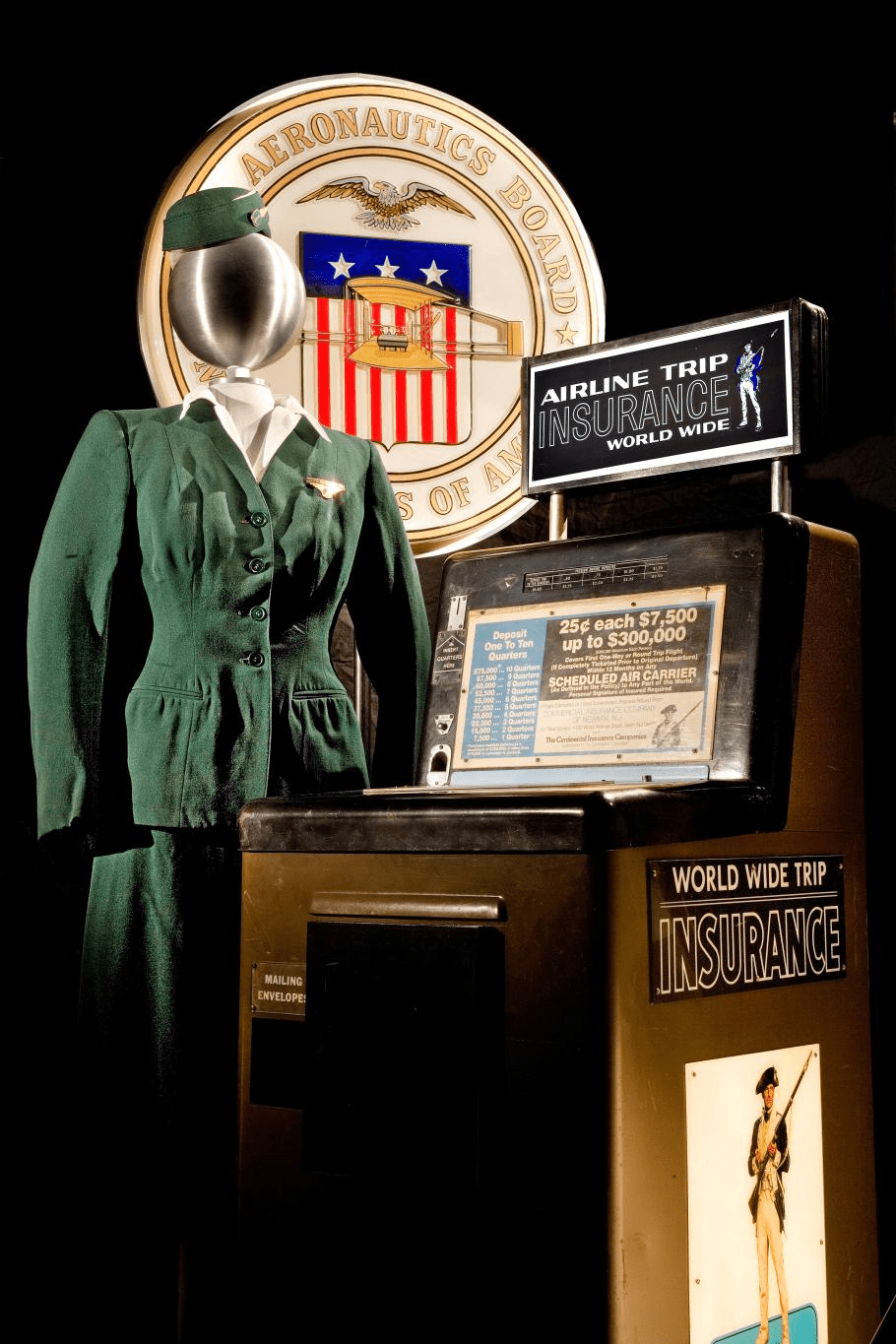
The dumbest insurance scheme of all no longer exists. When I was a kid there still were kiosks at airports where you could put in a small amount of cash, fill out a form, and, if the plane you boarded crashed, the beneficiary would get a payout. There’s an old machine on display at The Smithsonian Air and Space Museum (pictured). It cost a quarter for $7,500 of coverage.

A publication called Insurance Business Magazine recounts a lawsuit from 1963–the dawn of the jet age and a more dangerous time to fly than today–that laid bare the numbers. It said that “a recent annual report filed by a group of underwriters who handle a large portion of air trip insurance business in the United States, showed total premium collections for the year to be $3,382,561. In the same year the group wrote air trip insurance for $84,564,025,000 and paid out $1,388,839 in losses.”

That is just wildly profitable (even with the occasional plane blown up by relatives who had taken out policies). Fortunately the business has disappeared as people aren’t as afraid of flying–nor should they be. According to the most recent data from an industry body through 2021, there had been just two domestic fatalities in total since 2010. Even in 2009 when there were 50 it came to 0.010 per 100,000 departures.

Is insurance generally a scam? Not at all. I personally am insured to the gills–both the mandatory types like home, auto, and health as well as term life and even umbrella insurance. (Unless you understand what you’re buying or are doing it as some sort of estate planning, high net-worth tax boondoggle, don’t buy more than a cheap term life policy to cover your productive years).

Term insurance makes sense. There’s a low probability of my dying while the policy is in force and the market is transparent and competitive enough that I know the insurance company is making only a reasonable profit for their risk. If all goes well my family will never see a penny back. The insurance company verified that I don’t smoke or use drugs, checked my weight, blood pressure, cholesterol, and family history and made me an offer. I’m reassured that I’m not subsidizing an overweight skydiving chain smoker who got the same price.

That is what insurance is–pooling risks to protect you against an unexpected financial blow. Don’t buy it as a way to assuage buyers’ remorse.

(This post was published earlier on my new Substack newsletter, which is free).

Uncategorized

Show Them You Care: Be Like Clemenza

‘Tis the season to waste money and enrich huge corporations in a performative act of kindness.

With the school year ending and graduation from college or high school upon us, you have a problem. A gigantic industry will make more than a trillion dollars offering you a solution, pocketing a very handsome profit for itself.

Your kids’ teachers and coaches as well as your children, nieces, nephews, grandchildren, and friends’ and neighbors’ children all traditionally receive a gift at the end of a school year, and especially around graduation. Who has the time to buy an actual physical object for them, though? And who knows if they’ll like it? Returning a small item with a gift receipt is a hassle so they will just have one more piece of junk to clutter up their house.

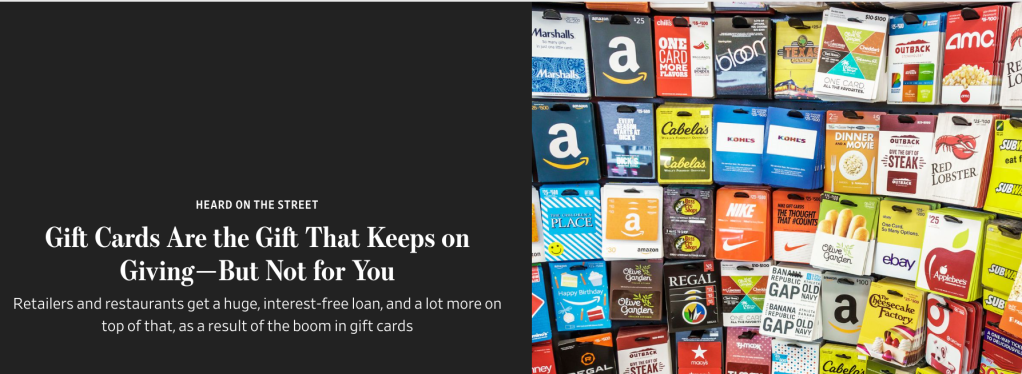
Gift cards are the obvious choice, which is why hundreds of millions of the plastic cards loaded with money will be handed out year round with peak periods at the end of the school year and the winter holidays.

There are two basic types of gift cards—closed loop and open loop. The far more common closed loop ones are for a specific company such as Applebee’s or Nike and can only be spent there. They’re usually denominated in multiples of five starting around $25. Open loop ones are a pre-loaded debit card that typically comes with a fee for the buyer and an indirect one for the recipient—they lose value over time if not spent.

Both are a bonanza for issuers. First of all, they have your money well before it’s spent, and often it never is. Unused or expired ones earned companies $14 billion in 2020 according to Mercator. You’ve probably heard of “leakage,” the retail industry’s euphemism for losses from shoplifting. This one is called “breakage” and they are a lot more quiet about it. Breakage is pure profit.

For example, Starbucks had what is technically a liability on its balance sheet in early 2022 of about $2 billion. It decided the previous fiscal year that it could book $181 million of that as a gain because some probably would never be used. Meanwhile, it has your cash. If it just put that amount of money in the bank then it would earn an extra $100 million at current interest rates over a year.

There’s more. Most people do spend their gift cards, but usually not exactly the round amounts—particularly for lower-denomination cards that you’re giving the neighbor’s kid for his birthday. The industry calls this “overspend” and it is also a nice chunk of change. Gift card facilitator Blackhawk Network gleefully calculated that people will spend an extra 74% on average on a $50 gift card. The lower the denomination the greater the likelihood that additional money is spent.

Even people who try to spend only about the amount of their gift often can’t because they got one for a business they rarely visit. Speaking as the husband of a school aide, I can tell you that it happens a lot. Mrs. Jakab will eventually use that Dunkin’ card because I keep reminding her about it, but we’re thrifty, make-coffee-at-home people. And many of her fellow school aides aren’t as fortunate as her being married to a lavishly paid journalist and author (🤔). Plenty are trying to keep it going another year or two on creaky knees so they can get a higher Social Security benefit or even to help their adult children with student loans.

Whether they don’t need it or they just really need the money more, this has spawned an inefficient, secondary market in gift cards with the discount to the face value rising the less-frequented the business is. Amazon cards are almost like real money, changing hands close to face value. A $25 gift card for Bob’s Discount furniture, though? Unless you’re buying a $30 sofa, it probably will gather dust. Many do. Or you could sell it online for a whopping $14.

Why do people spend more and more each year on gift cards? Because they’re convenient and it’s polite. But here’s a solution that’s just as convenient for you and far better for the recipient: Give them cash. Legal tender can be spent on literally anything. No, you can’t buy a car or a house with cash without arousing suspicions, but small sums are fine and can even be put in the bank and saved.

Were you considering a more generous gift that would be tougher to spend in cash? Give a check. In the American Jewish community that’s still the default gift for a Bar or Bat Mitzvah and, if a kid is smart, he or she will save a chunk of it. Those small gifts invested in an index fund at age 13 could turn into a down payment for a house at age 33.

Isn’t compound interest the best? Multiples of 18 (the 18th letter of the Hebrew alphabet is Chai, which means “life”) are auspicious, so $180 or $360 if either some or all of the family is invited to the party is pretty standard where I live.

Likewise, if you live in a building with a doorman (generally a team of doormen, plus a “super” in the New York area), you’re expected to hand each of them a holiday bonus. These are people who don’t earn a lot and won’t be reporting these annual tips worth thousands of dollars to the IRS. Cash is appreciated, but most apartment-dwellers write checks these days (makes it more likely they actually get it and that they’ll remember your generosity).

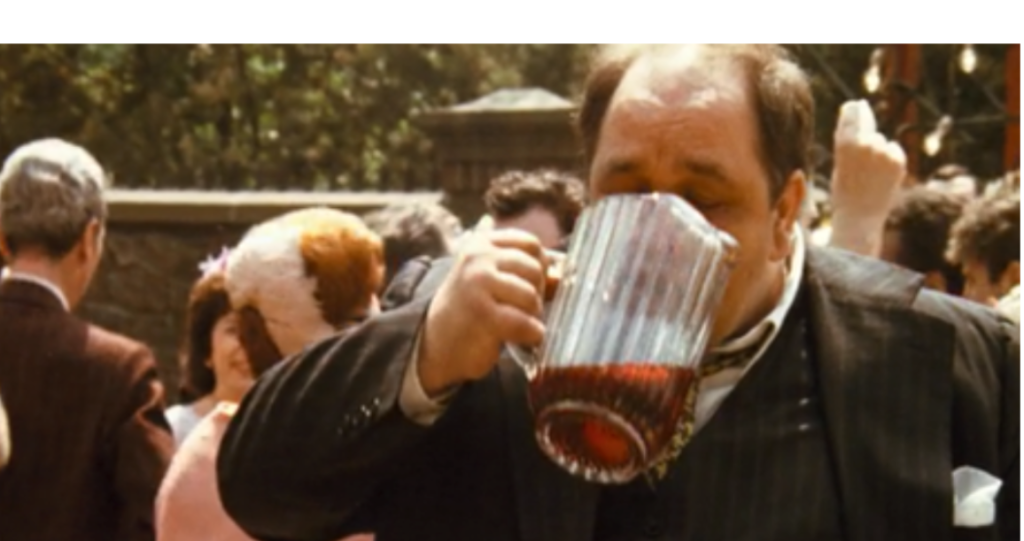
Why don’t people give cash for the many smaller gift-giving occasions? I think it’s because it’s seen as gauche and, sorry for using this word, but “ethnic.” Americans think of the bag full of cash gifts at the wedding in “The Godfather” and the low-class antics of immigrants who don’t know better—a sweaty Clemenza drinking from a pitcher of wine and wiping his mouth on his suit sleeve.

Cash also has a whiff of criminality—like you have something to hide. That perception is both at least a mild inconvenience for the recipient, though, and just wrong. Tony Soprano can buy a gift card with cash and so can you. In fact, criminals love gift cards. Get over it and show that special person you really care by giving them currency.

Columns

A Real Hotel California

Something funny happened when my late mother-in-law came to live with us six years ago. No, it wasn’t that I decided to move to a tent–she was lovely. But she really needed her own place. Renting anything that was nice, close to us, and accessible to public transportation was beyond her budget. Then my wife and I lucked out and found a beautiful co-op, studio apartment with majestic views of Manhattan and two swimming pools for only $62,500.

That isn’t a typo. The monthly fees, which included everything from utilities to cable to a parking spot for us, were just $1,000. Co-op rules made it impossible for someone of her limited means to buy it, even if we gave her the money, so we did and she just paid the fees.

As an owner (technically a shareholder), I got the financial statements and board meeting notes of the co-op, which consisted of five large buildings. (Here’s an explainer for those of you unfamiliar with this type of apartment, which is most common in the Northeast). The balance sheet was a mess due to its unionized workers’ reliance on a multi-employer pension plan that was underfunded. As more employers default, the surviving ones pick up the liabilities.

I was aware of that going in. But the most surprising thing was how some of the other residents saw things. For example, there was a big debate about what to do with a gorgeous penthouse apartment the co-op had taken into possession when the owners died and their estate defaulted. It had a spacious balcony big enough for a party with an unobstructed view of the Manhattan skyline and Hudson River. If it had been a condo it would have been worth millions. Yet the co-op board had it on sale for $38,000, barely half what we paid for my mother-in-law’s far smaller place, and was finding no takers. The problem is that the fees were proportional to floor space and they had climbed to more than $7,000 a month–about what the most expensive rental in town would cost.

The board minutes indicated that residents were shocked it was so cheap and were wary of selling even at that price because it would depress the value of their own apartments. But the foregone fees were costing them all money every month they hesitated, and that the low price wasn’t the actual problem–it was what it foreshadowed. The liabilities they had all signed up for could eventually erase the resale value of their smaller apartments too.

The penthouse was, financially-speaking, far inferior to a rental of similar quality, which is why nobody was interested. If you can’t afford a fancy place any longer, you just move out at the end of the lease. A landlord doesn’t chase you down asking for that amount in perpetuity until you can find someone else to live there. And if there are some emergency expenses like fixing a roof, he or she can’t just tack on the cost to your rent.

We sold our apartment at a small profit after my mother-in-law’s passing, but I thought about the upside-down economics of that complex as I was researching my latest column for The Wall Street Journal. If you own any type of property, and certainly if you’ve ever considered buying a timeshare, keep reading.

It was provocatively titled “How To Buy a Week in Paradise for $1.” The average sale price for a timeshare unit bought from a developer is about $24,000, typically for a one-week per-year deed. There are 1,541 resorts in the U.S. alone with more than 200,000 units divided into 51 weeks (one is for maintenance). If just three-quarters are owned by individuals who attended one of those 90 minute sales pitches and owners’ mental accounting puts existing units’ value at just $15,000 apiece then the combined (imaginary) value of those weeks is well over $100 billion. These days some people buy units in a land trust giving them points to use, but the same principle applies, and the points are even more profitable for developers (I explain why here).

Timeshares bought on the secondary market might be worth it for larger families who enjoy going to the same place every year or people with the patience to navigate complex exchange schemes, but what are they really worth? Even some beautiful properties can be had for a dollar. There’s a reason the developer doesn’t just take them back for free.

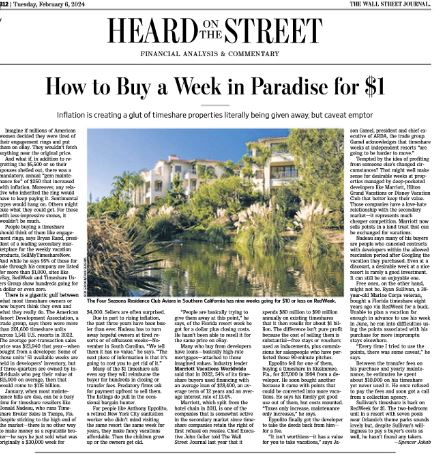
The management of an absolutely stunning Four Seasons resort in southern California that let me use a photo angrily asked the paper to take it down when I pointed out in the caption that several units could be had there for practically nothing. At least one actually cost less-than-nothing as the desperate seller was willing to pay $1,000 in property closing fees too. You can check out any time you like, but you can never leave.

(Here’s a pic of the print issue where the photo appeared).

Just a casual search on sites like RedWeek or Timeshare Users Group turns up hundreds of listings for a buck, or even zero, and that understates the problem because many properties would only be worth buying if you were paid way more than the closing costs. Sellers can’t afford that, and those sites don’t accept negative numbers anyway. Owners who just walk away are hounded by collection agencies. Two people I spoke with, a retired New York sanitation worker and an ex-Marine sniper who was wounded in Iraq, are still trying to sell properties they thought were bargains.

It is possible to force a resort to take a property back by hiring a reputable lawyer. But someone has to pay those delinquent fees to keep the lights on. Distress compounds the burden on those who can afford, and choose, to keep paying.

The high-end of the timeshare market–the most desirable weeks at nice resorts, such as President’s Day week in Florida or Vail managed by a large, deep-pocketed company–is still worth something. Maybe a week was purchased for $30,000 and could sell for $4,000, which is a specific example cited to me in the article by broker Don Nadeau. As one person told me, buyers should think of resorts more like engagement rings than property–their value is immediately less than what you pay a developer, but you can still enjoy it and have a sentimental attachment.

So I hope that you don’t own a timeshare that you regret, but I encourage those of you with larger families to consider renting weeks from owners at a secure site–I’ve used verified transactions on RedWeek. They can be a good deal for people on both sides of the transaction.

How does this apply to homeowners? Well, taken to an extreme, the math eventually works the same way. 

A pretty typical house near mine is for sale for $749,000. The owner had tried to rent it for $3,800 a month in 2021, according to Zillow. I would expect it to sell because a shortage of properties is keeping prices high in New York City suburbs for now, but the underlying costs have gone up a lot. Someone making a 20% down payment would still be out-of-pocket $60,000 a year for their mortgage, insurance, and property tax. The latter two of those can keep going up as inflation and the wages and health care costs for local, unionized teachers and police march higher. We just got our assessment for 2024 yesterday and I’m trying not to think about it.

Clearly you would struggle to make money as a landlord buying it at today’s mortgage rates and prevailing rents–you’d be out of pocket by about $10,000 a year even before maintenance. But what about just biting the bullet and owning it? It’s an investment, right?

When my wife and I bought our house 20 years ago, the combined tax and insurance was 1.5% of the price we paid. Today it is nearly double that–not a deal killer, but not good. Extrapolating that trend, if we decided to become snowbirds in 20 years, that would have grown to 6% of the home price every year. Of course that assumes all of our neighbors are able to keep paying those taxes. What if many can’t, or if there is a political uproar resulting in people below a certain income or wealth level receiving a break at the expense of those able to keep paying? What if that starts to hit the appreciation of homes in our town and state? The $38,000 co-op cost more than $80,000 a year.

Of course the dirty secret of the timeshare business is that they were never “worth” $30,000. The price reflected the costs of a slick sales job and all the goodies they had to give away. Marriott buys back old timeshares for $80 million to $90 million a year that it resells for $1 billion or so, according to my conversation with its CEO, John Geller. That means you can pay slightly more than Marriott would pay–maybe 15 or 20 percent of the price at a presentation–and get a timeshare that way too. Yet even some bargain hunters are now surprised at the difficulty of finding a buyer.

Homes don’t have a secret secondary market and the math won’t get so extreme. But it can grow to enough of a burden that people who counted on retiring on their home equity might find that there isn’t nearly as much left as they expected there to be. The older couple who sold us our house in 2003 were very interested in maximizing the sale price because it was pretty much all they had saved, and that was pretty typical.

The moral of the story? Other than steering clear of timeshare promotions (unless you are 100% confident you won’t buy) is to consider the future liabilities of things that sound like investments.

investing · The book · Uncategorized

Least Likely to Succeed

aapic

(This excerpt originally appeared as a post on my LinkedIn feed).

Whoever first said that “life isn’t a popularity contest” probably needed to get out more, but he or she had one redeeming quality: being a good investor. My new book, Heads I Win, Tails I Win, shows that most of us are lousy.

Think back to your high school. If it was anything like mine, the student body voted to decide which of their classmates was cutest, best-dressed, funniest and most likely to succeed, among other categories. The last of those was often the easiest to guess: a kid who had it all figured out and was well on his or her way to an Ivy League university followed by medical school or some other solid, lucrative path.

There isn’t a vote for least likely to succeed. The point of these contests isn’t to hurt people’s feelings, even if they sometimes do. But if there were then the recipient would be equally obvious: that good-for-nothing stoner who was late for every class and barely graduated or didn’t at all.

Now imagine being able to buy a share in the future earnings of Mr. or Mrs. “Most Likely” and “Least Likely” as if they were a company. The market prices would be sky high for the former and a pittance for the latter, with good reason. Everyone else would fall somewhere in-between. That’s exactly how the stock market works, though the vote occurs every minute of the day.

Whether you rely on conventional wisdom or actual surveys such as “America’s Most Admired Companies,” picking out the corporate crème de la crème isn’t hard. But investing in them exclusively happens to be a bad idea. In fact, the least admired companies on such lists tend to outperform the best ones as measured by stock market performance.

Think back on the high and low achievers in your graduating class. Some of the bad eggs probably turned things around and, while they may not be fabulously wealthy, are doing fine. Meanwhile, some super-achievers never really lived up to expectations. Likewise, we pay too much of a premium for respectability in the corporate world. Once a company is a blue chip, it’s priced not only appropriately but at a premium. Translated into stock selection, going with less popular, less obvious choices is likely to be profitable. Finance professors Meir Statman and Deniz Anginer combed through several back issues of Fortune Magazine’s ranking of respectability and created a “most admired” and “least admired” portfolio. Shares of the latter outperformed the former by nearly two percentage points a year.

Favoring Wall Street’s redheaded stepchildren can be done systematically. One way is to buy companies that essentially are being dumped by larger corporations. Unable to sell them or unwilling to pay a big bill to Uncle Sam in the process of doing so, companies frequently “spin-off” subsidiaries to existing shareholders in a tax-free transaction. The thing is, though, professional investors act strangely when these brand new companies land in their portfolios. Suddenly a fund that owned, say, a large bank, also has the same exact stake in a small or medium-sized insurance company. They already owned it before, of course, but it didn’t have its own name and stock ticker. In a value-destroying disservice to their clients (hey, what else is new) , they decide that keeping it in their portfolio is more trouble than it’s worth so they’re likely to sell their shares in the near future, putting downward pressure on its price early on.

Meanwhile, a middle-level corporate manager at the former insurance subsidiary suddenly finds himself as the chief executive of a listed company with his or her very own stock options and an even stronger incentive to do well. It may take a while, but the results usually are surprisingly good. The phenomenally successful value investor Joel Greenblatt wrote about his strategy of buying spinoffs in You Can Be a Stock Market Genius. Other investors have taken note. There are exchange traded funds that buy spinoffs exclusively. A $100 investment in an index tracking their performance has grown to $319 in the past year compared to just $170 in the broad stock market

Another long-running, well-known, yet still successful way to profit from what’s out of favor on Wall Street is to buy the “Dogs of the Dow” each January – the ten highest dividend-yielding stocks among the 30 Dow Jones Industrials. These usually were relatively poor performers in the previous year, allowing their dividend yields to rise (as price falls, yield rises as long as payouts are unchanged). A $100 investment at the start of this century in the Dogs turned into $313 compared to $233 in the broad market.

Far worse than investing in the most-admired companies is having a preference for the most glamorous or exciting ones. The very first investing book I ever read, Peter Lynch’s 1989 bestseller One Up on Wall Street, warned investors away from companies with flashy names. It specifically said companies with an “x” in their name were to be avoided.

It seemed like a throwaway line but it stuck in my head years later. Just for fun I decided to test it out for an investing column in 2010. The results were surprising. I found 109 stocks in the Wilshire 5000, the broadest U.S. stock index, that began or ended with an “x,” including a few that did both. Right away I could see that Lynch was onto something. Only 49 of them had been profitable in the previous year. Even weeding the money-losing ones out, the remaining stocks were far more expensive on measures such as price-to-book or price-to-earnings than the broad market and also a lot more volatile. In other words, they were both riskier and less desirable on average.

Why would there be a connection? As any Scrabble player can tell you, few words have an “x” so that letter, probably along with “z” and “q,” lend themselves to made-up, snazzy-sounding names. By my calculation, an “x” appears in company names 17 times more frequently than in actual English words.

The same warning could have been given about companies with a “dot-com” in their name 15 years ago. A quarter century earlier, in the swinging sixties, it was anything with the suffix “tronic” or the word “scientific.” Hot companies included Vulcatron, Circuitronics, Astron and the gratuitously snazzy-sounding “Powerton Ultrasonics.” In his classic A Random Walk Down Wall Street, Burton Malkiel tells the story of a company that sold vinyl records door-to-door. Its stock price surged 600% when it changed its name to Space Tone.

The fact that boring stocks are better seems to be a lesson that each generation has to learn anew. Superior bang for the buck from dowdy, out-of-favor companies was discussed as early as 1934 in Security Analysis, the investing classic by Benjamin Graham and David Dodd. Graham was the teacher and has served as the inspiration for the most-successful investor of all time, Warren Buffett, so it’s safe to say that his theories have worked pretty well in practice.

Each generation may make the same mistakes, but individual experience seems to matter. When my son’s high school had a stock picking contest I asked if I could see his classmates’ portfolios. The most popular choices were highfliers such as Tesla, Facebook, and Apple. Not a boring company in sight. Most of his classmates lagged the market.

A company called Openfolio that anonymously aggregates results and holdings from thousands of individual investors showed the same thing. Some 77% of Tesla shareholders were 49 or younger while 73% of Exxon Mobil owners were over 50. But younger investors’ love of flashy companies hurt them. During 2014 the portfolios of 35 to 49 years olds lagged 50 to 64 year olds by 2.3 percentage points. Those below 25 lagged the older group by a whopping 6.4 percentage points.

Maybe we do live and learn.

investing · The book

Barron’s Magazine Review

barrons

I have a soft spot for Barron’s Magazine, the investing weekly. When I was a kid my dad would always have a folded copy in his briefcase. A little over 13 years ago, when I decided I wanted to be a financial journalist, one of the first things I did was apply for a job at Barron’s. They weren’t hiring but I wound up writing a couple of dozen freelance pieces for them anyway.

I’m happy to say that they, or at least their book reviewer, have a soft spot for me too. The review that appeared of Heads I Win, Tails I Win was very flattering. I like how it starts:

Spencer Jakab comes off as a reluctant financial guru. You might expect a Wall Street Journal columnist and editor (Heard on the Street, Ahead of the Tape) to stress his investment prowess in a book on investing. But not until page 249 does Jakab confide that he rescued his mother’s stock portfolio from the dot-com bust of the early-2000s, persuading her to sell her Nasdaq-related holdings in the fall of 1999 and park the funds in “boring Treasury bonds.” Her circle of middle-age Hungarian immigrants ignored his advice and lived to regret it.

Anyway, read the whole thing and then read my book if you haven’t already.


investing · The book · Uncategorized

Zen and the Art of 401(k) Maintenance

books

My book was featured in a nice article by Ron Lieber in The New York Times. It starts out mentioning an alleged Fidelity Investments study that showed a surprising finding about investor success. Here’s a transcript from Business Insider of Jim O’Shaughnessy discussing it with Barry Ritholtz:

O’Shaughnessy: “Fidelity had done a study as to which accounts had done the best at Fidelity. And what they found was…”

Ritholtz: “They were dead.”

O’Shaughnessy: “…No, that’s close though! They were the accounts of people who forgot they had an account at Fidelity.”

Except, as Lieber found, the study had never been conducted. For what it’s worth, I bet that’s what they would have found since, as I note from two actual studies in the book, frequency of trading or even checking your brokerage account correlates negatively with returns. Rip Van Winkle would’ve been an awesome investor.

In addition to being a nice piece on investing, the article has a photo credit (the pic above) by none other than little old me – surely a first for a Wall Street Journal reporter in our rival paper! It’s a snapshot of my collection (well, part of it) of bad investment books that I mention in Chapter One.

investing · The book

Money Magazine Article

AApic

A nice article appeared today in Money Magazine by Kerry Close about my book: “5 Ways to Make Smarter Investing Decisions-By Outsmarting Yourself.”

Who doesn’t like a listicle? I’ll let you read it if you want, but here’s the intro:

The best thing you can do for your portfolio may be absolutely nothing.

A steady, mechanical approach to investing is a predominant theme throughout Heads I Win, Tails I Win, a new book released today by Wall Street Journal“Heard on the Street” writer and editor Spencer Jakab. The former Credit Suisse stock analyst emphasizes that the vast majority of investors are wired to think they’re better at making money than they actually are—and that we ignore all evidence to the contrary.

The solution? “Put into place a process that will stop you from sabotaging yourself,” Jakab recommended when we spoke to him this week. That means investing in a methodical—and even mechanical—way, rather than reacting to the ups and downs of the market and pundits predicting gloom and doom on TV.