Uncategorized

Goodbye, Yellow Brick Road?

“Don’t fight the Fed” is one of the oldest and best-known nuggets of investing wisdom out there, but do people really understand it?

I have my doubts. Coined more than 50 years ago by the late, great Martin Zweig, who warned investors to be cautious ahead of the October 1987 stock market crash, it basically means that, when the world’s most powerful central bank puts its finger on the scale, you would be wise to be on the same side. Buy when policy is loose, be cautious when it is restrictive.

But something can go from being a novel and useful insight about markets in 1970 to such a piece of conventional wisdom in 2024 that it is best ignored. You might even want to bet the other way by taking some chips off of the table. (Hey, you’re something from the publisher of “The Hungarian Contrarian”–what were you expecting?).

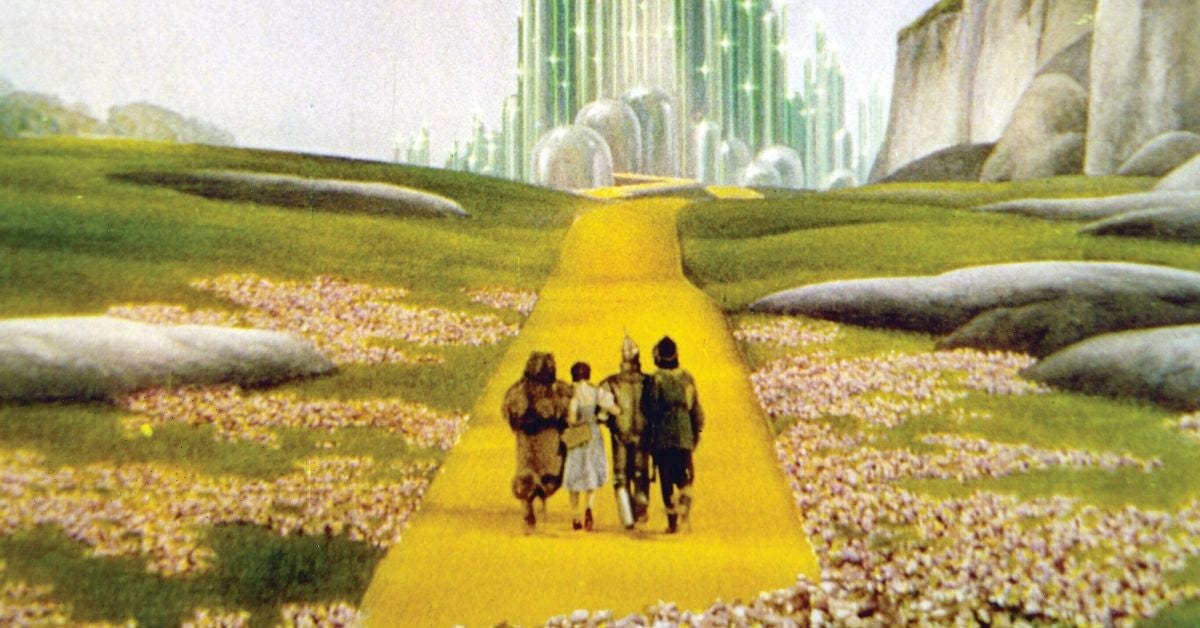
My column this weekend made that point by comparing the faith people have in Jerome Powell sending stocks soaring to new highs to the blind belief Dorothy and her companions initially had in the Wizard of Oz. There was initial excitement in the market, but, as has been the case the last couple of times a bull market was long in the tooth, the market might soon conclude that the man behind the monetary curtain frantically pulling levers isn’t really so “great and powerful.”
Back in Zweig’s heyday the Fed just had to lean in a certain direction to make markets move and individual investors weren’t parsing every word. For 25 years now–ever since the Fed opened the spigots to save the financial system following hedge fund Long Term Capital Management’s collapse–it has repeatedly ridden to the rescue in an increasingly aggressive fashion. That has reinforced the expectation that whatever leads the Fed to be concerned enough about the economy that it might cut rates, or stop raising them, is great for stocks. Once upon a time a disappointing report on the labor market was unequivocally bad news. Now it often sends stocks rallying. When cause and effect are that muddied it should give investors pause.
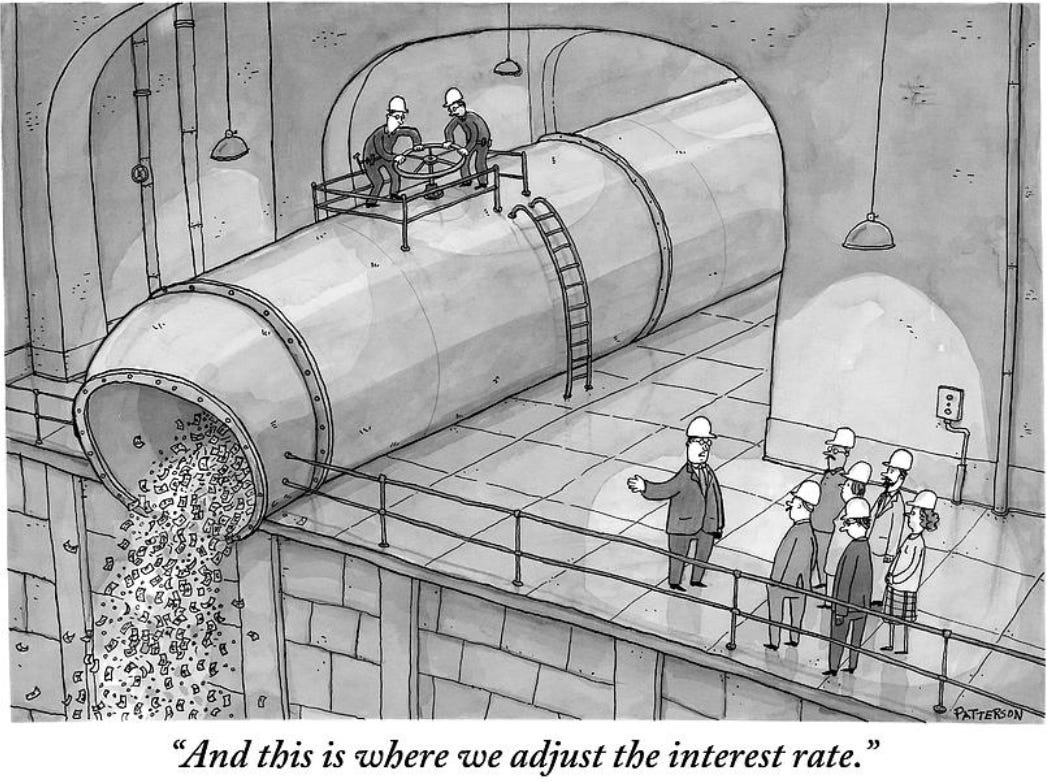
Why? For one, monetary policy isn’t some sort of magic wand. It takes quite a while to filter through to companies and individuals and to have an actual effect on corporate profits. If the economy is already weakening and valuations high at the outset then the start of a cutting cycle can be a massive head fake.

From my column:

Take the start of the rate-cutting cycle in 2007—one that coincidentally began on the same day of the year, the same starting federal-funds rate, and was for an identical amount, half a percent (50 basis points)—as Wednesday’s move. The effect was electric: The Dow Jones Industrial Average had its largest gain in more than four years, rising 336 points, the equivalent of about 1,000 points today. Lehman Brothers shares were among the top performers, surging 10%.

But, as we know now, stocks were just three weeks from their bull-market peak, a recession would begin in January 2008, and Lehman would collapse less than a year later in the largest-ever U.S. bankruptcy. By that time, the Fed had cut rates six more times—moves of 25, 25, 75, 50, 75 and 25 basis points, in that order. The moves took rates to 2%, their lowest in nearly four years. In the two months following the Lehman panic, the Fed made three more steep cuts, slashing rates to zero (technically a range of 0% to 0.25%) for the first time ever.

Stocks surged then too, with the benchmark S&P 500 jumping 4.7%. The Dow’s gain of 360 points would be nearly 1,700 today. Yet they erased all of that day’s rally in less than a week and would go on to shed another quarter of their value before bottoming in March 2009.

To be clear, the conditions that existed during the housing crisis were extreme, sparking the worst U.S. economic downturn since the Great Depression. Extreme events are by definition rare, and most predictions of doom are false alarms. More money is lost bracing for bear markets than in them, even when they really happen.

Will history repeat? That’s doubtful–the conditions back then were extreme. The housing crisis sparked the worst U.S. economic downturn since the Great Depression. There are plenty of excesses now, but only limited signs that the economy might be headed for a recession at the moment. But starting valuations matter and, based on reliable long-term measures, stocks are more expensive than they have been more than 95% of the time over 150 years of history. They also have returned more than 35% since the Fed began to raise rates. 

A few readers took my column as doom-mongering. It isn’t. I’m trying to puncture a silly narrative that a handful of people in Washington can take a decision that sends stocks soaring from all-time highs. That isn’t their job and, even if it were, they wouldn’t have the power to make stocks rise in perpetuity. The market’s initial rally means nothing. If life were that simple then recessions and bear markets would barely ever happen. In the past century alone there have been 17 and 22 of them, respectively. The Fed has existed during that entire period.

Don’t fight the Fed, but don’t speculate on stocks at record highs because you think it’ll bail you out either.
Uncategorized

Show Them You Care: Be Like Clemenza

‘Tis the season to waste money and enrich huge corporations in a performative act of kindness.

With the school year ending and graduation from college or high school upon us, you have a problem. A gigantic industry will make more than a trillion dollars offering you a solution, pocketing a very handsome profit for itself.

Your kids’ teachers and coaches as well as your children, nieces, nephews, grandchildren, and friends’ and neighbors’ children all traditionally receive a gift at the end of a school year, and especially around graduation. Who has the time to buy an actual physical object for them, though? And who knows if they’ll like it? Returning a small item with a gift receipt is a hassle so they will just have one more piece of junk to clutter up their house.

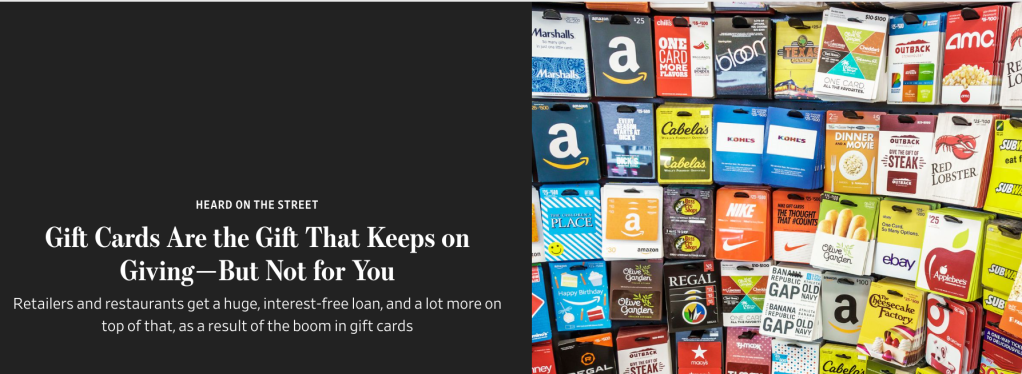
Gift cards are the obvious choice, which is why hundreds of millions of the plastic cards loaded with money will be handed out year round with peak periods at the end of the school year and the winter holidays.

There are two basic types of gift cards—closed loop and open loop. The far more common closed loop ones are for a specific company such as Applebee’s or Nike and can only be spent there. They’re usually denominated in multiples of five starting around $25. Open loop ones are a pre-loaded debit card that typically comes with a fee for the buyer and an indirect one for the recipient—they lose value over time if not spent.

Both are a bonanza for issuers. First of all, they have your money well before it’s spent, and often it never is. Unused or expired ones earned companies $14 billion in 2020 according to Mercator. You’ve probably heard of “leakage,” the retail industry’s euphemism for losses from shoplifting. This one is called “breakage” and they are a lot more quiet about it. Breakage is pure profit.

For example, Starbucks had what is technically a liability on its balance sheet in early 2022 of about $2 billion. It decided the previous fiscal year that it could book $181 million of that as a gain because some probably would never be used. Meanwhile, it has your cash. If it just put that amount of money in the bank then it would earn an extra $100 million at current interest rates over a year.

There’s more. Most people do spend their gift cards, but usually not exactly the round amounts—particularly for lower-denomination cards that you’re giving the neighbor’s kid for his birthday. The industry calls this “overspend” and it is also a nice chunk of change. Gift card facilitator Blackhawk Network gleefully calculated that people will spend an extra 74% on average on a $50 gift card. The lower the denomination the greater the likelihood that additional money is spent.

Even people who try to spend only about the amount of their gift often can’t because they got one for a business they rarely visit. Speaking as the husband of a school aide, I can tell you that it happens a lot. Mrs. Jakab will eventually use that Dunkin’ card because I keep reminding her about it, but we’re thrifty, make-coffee-at-home people. And many of her fellow school aides aren’t as fortunate as her being married to a lavishly paid journalist and author (🤔). Plenty are trying to keep it going another year or two on creaky knees so they can get a higher Social Security benefit or even to help their adult children with student loans.

Whether they don’t need it or they just really need the money more, this has spawned an inefficient, secondary market in gift cards with the discount to the face value rising the less-frequented the business is. Amazon cards are almost like real money, changing hands close to face value. A $25 gift card for Bob’s Discount furniture, though? Unless you’re buying a $30 sofa, it probably will gather dust. Many do. Or you could sell it online for a whopping $14.

Why do people spend more and more each year on gift cards? Because they’re convenient and it’s polite. But here’s a solution that’s just as convenient for you and far better for the recipient: Give them cash. Legal tender can be spent on literally anything. No, you can’t buy a car or a house with cash without arousing suspicions, but small sums are fine and can even be put in the bank and saved.

Were you considering a more generous gift that would be tougher to spend in cash? Give a check. In the American Jewish community that’s still the default gift for a Bar or Bat Mitzvah and, if a kid is smart, he or she will save a chunk of it. Those small gifts invested in an index fund at age 13 could turn into a down payment for a house at age 33.

Isn’t compound interest the best? Multiples of 18 (the 18th letter of the Hebrew alphabet is Chai, which means “life”) are auspicious, so $180 or $360 if either some or all of the family is invited to the party is pretty standard where I live.

Likewise, if you live in a building with a doorman (generally a team of doormen, plus a “super” in the New York area), you’re expected to hand each of them a holiday bonus. These are people who don’t earn a lot and won’t be reporting these annual tips worth thousands of dollars to the IRS. Cash is appreciated, but most apartment-dwellers write checks these days (makes it more likely they actually get it and that they’ll remember your generosity).

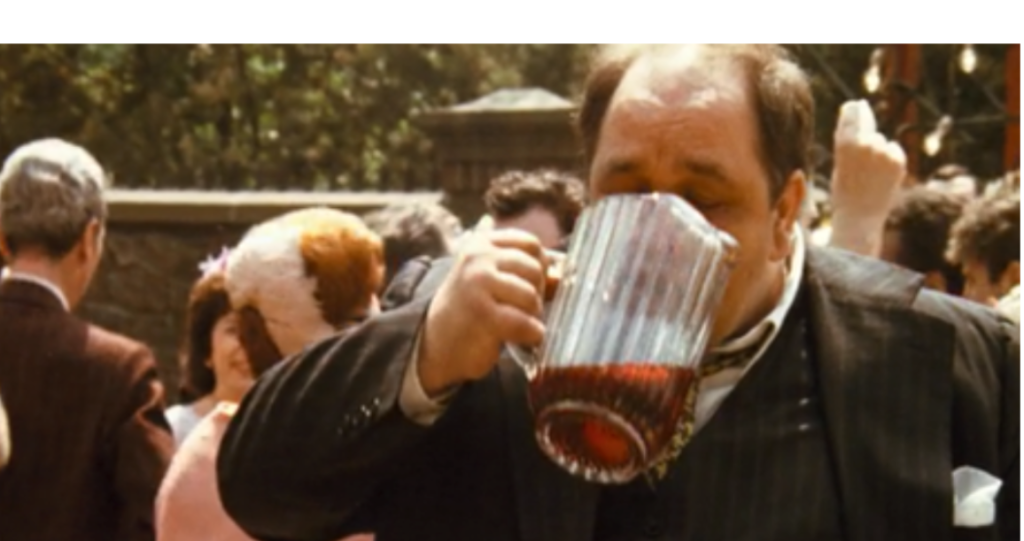
Why don’t people give cash for the many smaller gift-giving occasions? I think it’s because it’s seen as gauche and, sorry for using this word, but “ethnic.” Americans think of the bag full of cash gifts at the wedding in “The Godfather” and the low-class antics of immigrants who don’t know better—a sweaty Clemenza drinking from a pitcher of wine and wiping his mouth on his suit sleeve.

Cash also has a whiff of criminality—like you have something to hide. That perception is both at least a mild inconvenience for the recipient, though, and just wrong. Tony Soprano can buy a gift card with cash and so can you. In fact, criminals love gift cards. Get over it and show that special person you really care by giving them currency.

Columns

Let’s Call it ‘Miracle Gas’

I’ll admit that when I heard U.S. official call natural gas exports ‘molecules of freedom,” I thought it was pretty stupid. But a little research shows that the fuel has inspired people for millennia.

There is something in the air these days in Washington: methane with a smattering of higher alkanes and perhaps a little hydrogen sulfide.
Booming U.S. natural-gas production has put a swagger in the step of government officials now that the fuel is being exported around the world in liquefied form. Some see it as a political lever for democracy as much as an economic boon. The U.S. undersecretary of energy sparked much hilarity this week when he referred to the fuel as “freedom gas”—a moniker that reminded many of Iraq war era “freedom fries.”

But natural gas, once called “fossil gas,” was inspiring people way before the fracking boom. Historians surmise that a lightning strike on Mount Parnassus, where it may have seeped from the ground, created the flame that inspired the Oracle of Delphi. Some attribute the burning bush that Moses encountered in the wilderness to a similar phenomenon and also pillars of fire that played a role in Persia’s ancient religion.

Millennia later, then, why shouldn’t the miraculous boom in U.S. gas output, with all its ramifications, inspire some flowery language?

WSJ.com 5/20/2019
Columns · investing · journalism

In a galaxy far, far, away

The column I edit, Heard on the Street, has to find one mildly ridiculous business story for each issue of the paper, in addition to all the serious, analytical stuff. This usually isn’t a challenge, though there are occasional droughts when we have to dig deep.

Thank goodness for people like Patrick Byrne, CEO of Overstock.com. He is a gift to seekers of corporate hilarity and I was a bit mean to him today.


Patrick Byrne felt a great disturbance among his shareholders, as if millions of voices suddenly cried out for an explanation. This compelled the chief executive officer of Overstock.com to write one of the more bizarre news releases in recent memory about his reasons for selling 900,000 “founder’s shares” of the retailer.
“Frankly, I had no idea that shareholders would demand explanations of why and how I might want to use my cash derived from my labor and my property to pursue my ends in life,” he wrote.
Mr. Byrne detailed a number of personal projects, including charitable causes, for which he needed the cash. Even after all these years, he is most famous for a different rant about an alleged conspiracy to damage Overstock’s share price involving a “Sith Lord.” Mr. Byrne backed efforts to expose and punish allegedly manipulative short sellers.


Despite some spikes in the share price, the short sellers were basically right. Since the 2005 “Sith Lord” speech, the stock has dropped by 77% compared with a 133% gain for the S&P 500.
Perhaps Mr. Byrne should have directed more energy to running the company. Do or do not. There is no try.

Columns · investing · journalism

Making Monkeys out of Hedge Fund Stars

The darts don’t lie

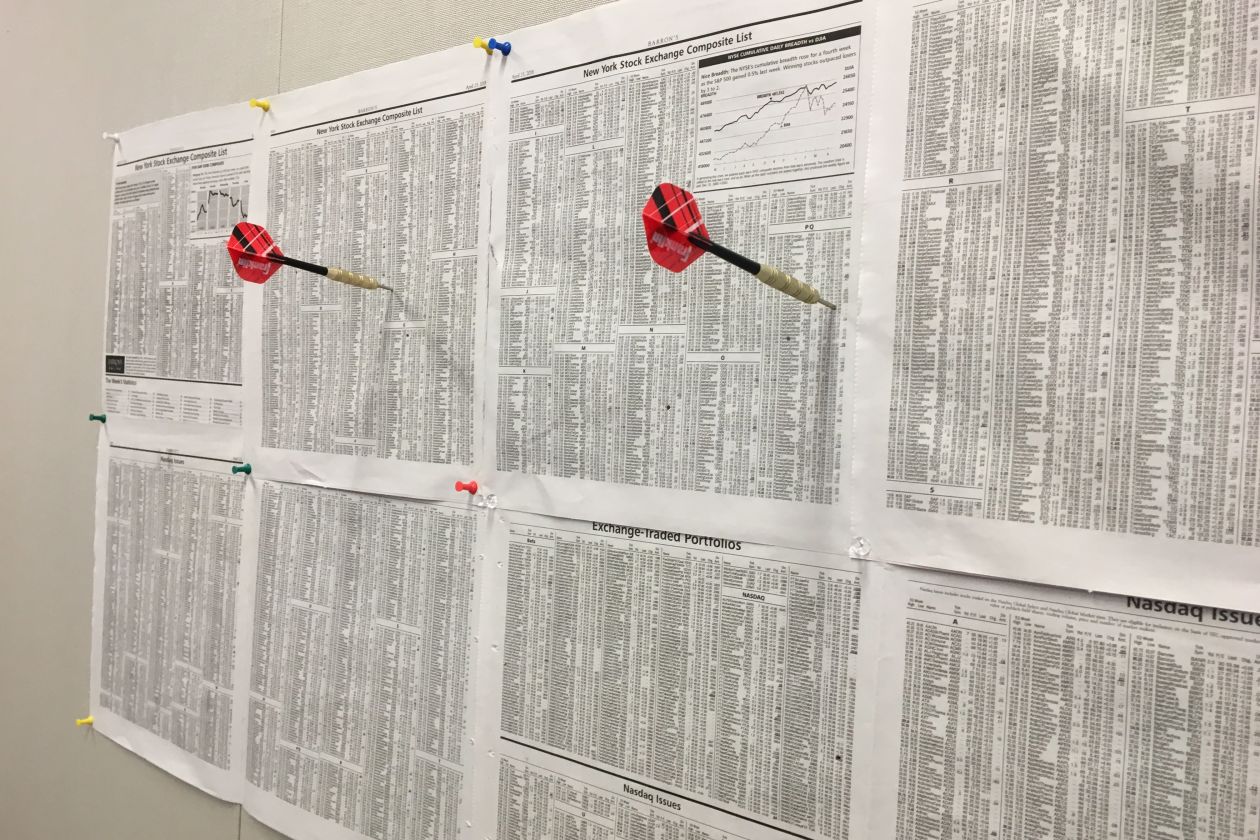
So we decided a year ago to poke some fun at the masters of the universe who unveil their stock picks each year at the Sohn Investment Conference . My team and I decided to throw darts at stock listings and see how things panned out. It was a blowout.


No animals were harmed in this financial experiment, but some human egos were bruised.
Burton Malkiel famously wrote in “A Random Walk Down Wall Street” that “a blindfolded monkey throwing darts at a newspaper’s financial pages could select a portfolio that would do just as well as one carefully selected by the experts.” A year ago the journalists at Heard on the Street decided to see if they could beat the crème de la crème—fund managers presenting their stock picks at the annual Sohn Conference in New York.
The results were brutal. Heard columnists, not monkeys, threw the darts at newspaper stock listings, but Mr. Malkiel would still approve. The columnists’ eight long and two short picks beat the pros’ selections by a stinging 27 percentage points in the year through April 22. Only 3 of 12 of the Sohn picks even outperformed the S&P 500.

journalism · The book

Mueller Needs a Literary Agent

I published my book without the benefit of a literary agent (long story), but going through the process without one made me appreciate what one can do for you, even if I got in the door at Penguin/RandomHouse on my own. This week I asked in an Overheard column how much money Robert Mueller could have earned if he had the rights to his free-to-read report on President Trump and his associates. Various versions were the number one, two, and four sellers on Amazon as of Monday morning.


If Robert Mueller was like most authors, he would be pingingAmazon.com ’s website hourly to track the popularity of his eponymous report. He also would be jumping for joy. As of Monday morning, various versions of the partially redacted text occupied the first, second and fourth slots among all books.

Of course, unlike the opportunistic publishers charging money for the 448-page tome, which can be read for free online, Mr. Mueller won’t be receiving royalties on his best seller. The fortunes of the various versions, available for preorder for as much as $26.89 in hardcover and $10.22 in paperback, speak volumes, though.
No. 2 in sales overall is a version containing a foreword by legal scholar and sometimes Donald Trump defender Alan Dershowitz. Despite costing a dollar more, readers seem to prefer a copy less flattering to the president featuring analysis by three Washington Post journalists.

From the Overheard column, April 22, 2019
journalism

Some personal news …

The following memo went out today at The Wall Street Journal from finance editor Charles Forelle.

I’m delighted to announce that Spencer Jakab is the new editor of Heard on the Street.
Spencer is a rock of the Journal’s financial commentary. He has been deputy editor of Heard since 2015, and he wrote the Ahead of the Tape column for years before that. His knowledge of companies, markets and financial instruments is encyclopedic. (By my Factiva count, Spencer did nearly 800 Tapes in about 45 months; good luck finding a topic in our universe he hasn’t touched.) He is an incisive financial thinker who embodies the Heard’s spirit of smart, provocative and timely analysis. He also writes killer ledes. He’s the ideal leader for our expansion of the Heard.
Before the Journal, Spencer worked at the Financial Times and here at Dow Jones Newswires, and was a stock analyst at Credit Suisse. He is the author of “Heads I Win, Tails I Win,” which is, naturally, a book about investing.
Spencer’s move means we are looking for a new Heard deputy. Please get in touch with him if you are interested. And please join me in warmly congratulating Spencer. I believe he’llbecelebratingatOlive Garden.
-Charles

journalism

Upset About the Election? Here’s Something You Can Actually Do

aapic

However you feel about the election this past week, it’s unlikely that you’re one of the small group actively taking part in protests against Donald Trump’s election or campaigning to get rid of the Electoral College. It’s silly and fruitless. The Donald chuckles at such impotence.

I’m a journalist, but the sort who keeps his political opinions fairly private. I don’t donate to political campaigns and haven’t registered to vote in primaries. One thing I’m not shy about, though, is standing up to thugs. I’m not calling President Elect Trump one, by the way. He hasn’t even taken the oath of office yet. I can tell you, though, that one thing that actually gets under his skin happens to be the same one that bothers authoritarian heads of state and corrupt businessmen worldwide: a free and vibrant press

In China or Russia or Turkey or Africa that often results in newspapers being shut down or even journalists getting murdered. Here, so far, we have disgusting antisemitic tweets, scary chants at rallies, and a threat by Trump to “open up our libel laws” and sue the media into submission.

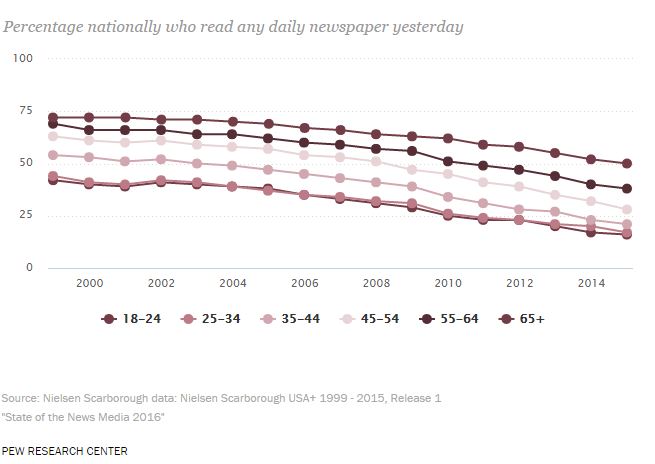
Despite all that, the main threat to the American media, and dare I say democracy, is apathy. You’ve probably heard that about 100 million people – far more than those who cast a ballot for either Trump or Clinton – simply didn’t vote. But what about the people who didn’t read a newspaper or support one? The reason so many people you and I know are shocked by Trump’s victory in the face of a mountain of concerns about his past conduct, his personality, and his agenda is that we relied on ethical, trusted sources of information about him.  But, according to Pew, just 21% of people ages 35-44 read a newspaper yesterday, down from 44% in 1999. Just 18% of Hispanics of any age did.

pew

Many people, perhaps including you,  read a newspaper article reached from a link on social media today but didn’t read another article in the same paper. And you probably didn’t pay for it. The total circulation revenue of all U.S. newspapers in 2014 was just $10.9 billion. It’s now just half of the sales of Starbucks. Between 2006 and 2014 the number of people employed in print journalism fell from 55,000 to 32,900. It’s probably below 30,000 now. Just this past week dozens of people in my newsroom lost their jobs and two sections were discontinued while two others were merged. The result is a thinner paper.

Do you subscribe to a newspaper or do you just graze on whatever is free on the Internet? Do you subscribe to more than one? Well here’s something you can do that will drive Donald Trump up the wall. You can do it right now at the expense of giving up a few cappuccinos a month or waiting a little longer to upgrade to that snazzy new iPhone: subscribe to an old-fashioned print newspaper.

Yes, this is what feeds my family, but it isn’t an act of charity and you don’t have to subscribe to The Wall Street Journal. Buy The New York Times or The Washington Post or your local paper. You won’t just be making a political statement.

Reading a print paper instead of zeroing in on the specific article you want to read on your phone or computer leads you to read all sorts of other articles you weren’t looking for but are glad you found. You don’t get that kind of serendipity in your targeted Facebook news feed or even a digital newspaper app. You’re also getting something hand-delivered to your house that’s an amazing daily undertaking put together by people who could be earning more in a different job and who take a lot of infuriating crap doing it. Even though I don’t write about politics, I get all sorts of nasty comments when I write something people don’t like, disparaging me or my profession, putting “journalist” in quotes. We get called the “lying media” and worse. And yes, of course, the result isn’t perfection. But what a newsroom full of journalists produces is a wonder. I think the British critic AA Gill said it best:

Newspapers are the size of long novels.They’re put together from around the globe from sources who want to lie, to manipulate, to sell things, hide things, spin things. Despite threats, injunctions, bullets, jails and non-returned phone calls,journalists do it every single day, from scratch. What’s amazing, what’s utterly staggering, is not the things papers get wrong, it’s just how much they get right.

Come on, make a statement by going retro and reading a paper or two made out of dead trees.

investing · The book

The Warren Buffett Argument

The Wall Street Journal is running a smart series this week, pegged to the 40th anniversary of the first index mutual fund, on the merits of passive investing. The editors asked me if there were any arguments for why active managers, despite their awful relative performance, are worth it. I came up with three arguments, the most convincing of which readers of my book will be familiar with: “Warren Buffett.”

aapic

The book · Uncategorized

Forbes Review

Forbes.png

A very nice review of my book appeared in Forbes. By “nice” I mean three things. First, it was quite flattering, which of  course is always welcome for an author. Second, it was written by a very nice guy, Simon Constable, with whom I  overlapped for three years when both of us were at The Wall Street Journal . Third, the book’s message and unique perspective  clearly came through.

Let me explain. Simon is, like me, a rare bird in financial journalism, having come from the finance industry. It’s a heck of a pay cut but also a heck of an advantage for the perspective it gives you. Like me, Simon knows that the emperor has no clothes when it comes to high-priced investing advice. Not only did he understand the book but he understood why I wrote it which is, well, nice.

A quote from the review:

The book gives a deep and realistic insight into how investing really works. I too worked in research on Wall Street, and what he says reflects how things actually work, or don’t work.

Jakab points out that there was more of a reason for him to write the book rather than fulfilling a demand for idle curiosity about the inner workings of one of the most misunderstood sectors of the economy. It’s that while most people can’t fix the appliances in their home, they are now required to be part time money managers of their retirement investments through their 401k or IRA plans.

Unfortunately, most people woefully lack the financial education to do so. His book makes a dent in that knowledge deficit, at least for those who read it.

Heads I Win, Tails I Win will be available everywhere fine books are sold on July 12th.