Travel

Exploding TVs, Exploded Chicken

The year I graduated from high school, before I took my first class in the dismal science, I got a memorable economics lesson.

That winter I visited Communist Hungary, where my parents grew up. Unlike my previous trips, I was old enough to explore on my own and I spent hours walking around Budapest. I also was aware by then that the country had a sort of hybrid economic system—a blend of limited free enterprise and central planning dubbed “goulash communism.”

In terms of wealth, Hungary was about as poor as Mexico at that time, but it was ahead of even the U.S. on some measures of human development—things like crime and education.

In terms of the environment, sadly, the system was a failure. Air pollution back then was 30 times the “acceptable limit.” Since there was no independent media. When Chernobyl, about 700 miles away exploded nine months earlier, word only spread when western radiation detectors picked up the signs days later. A group called Duna Kӧr, started that decade to oppose a controversial dam on the Danube along the border with then-Czechoslovakia, presented an early challenge to Communist rule.

Hungary was relatively prosperous within the Eastern Bloc. You knew there were tens of thousands of Soviet troops somewhere, but they mostly weren’t allowed to leave their barracks, in part because they’d be shocked at how easy it was to buy food and many consumer goods. That made it a lovely place for someone with dollars and able to speak the language in the 1980s. By contrast, even in 1992 when I was backpacking through Russia and Ukraine, I was vastly wealthier (600 rides on the Kyiv Metro for a buck), but I found hardly anything I wanted to buy.

It was possible to make a good bit of money in Hungary in the late 1980s through limited private enterprise. The vast majority of people lived in a parallel economic reality, though, where having a telephone at home was a major bureaucratic achievement.

I remember walking into an auto showroom where the various Eastern Bloc models were on display. It had salespeople, but it might have been the easiest job in the world: Next to each model there was a price and then the number of years you’d have to wait to get the car.

At the top of the list was the relatively new Lada Samara, the most-modern car ever built in the Soviet Union, described by Car and Driver magazine as “early Hyundai” producing “noises that would shame a John Deere dealer.” I can’t recall the price, but the wait was 15 years. The price was lower but the wait identical for the Lada “Zhiguli,” based on a 1960s Fiat 124. (I would buy a used 1986 model in 1993 for $1,400—my Hungarian-American friend Peter and I shared it and paid $700 each). Everything in it broke except the engine and transmission and the heat was on full blast all year. Cool car, though—this is how it looked:

VAZ-2101 | Classic Cars Wiki | Fandom

At the bottom of the list was the Trabant, East Germany’s car of the year in 1957 and every year after that. Appearing on many lists of the worst vehicles in history, it was made of something called duroplast instead of metal and had a two stroke, smoke-belching 24 horsepower engine you’d only find on a lawnmower today. I could have bought one about 10 years after spotting it in the showroom for around $120 (vetoed by Mrs. Jakab 😢). I wrote a Wall Street Journal cover story about people who imported them to the U.S. out of nostalgia. In 1987, though, the waiting list was eight-and-a-half years.

Here’s Ronald Reagan with a joke about the Soviet car salesman.

Around that time—the last couple of years before the Iron Curtain fell—some young, entrepreneurial Hungarians took full advantage of the wacky economy. Two close friends I’d meet at work six years later, both of whom are a couple of years older than me and who were university students in East Germany at the time, exploited mismatched Eastern Bloc currency prices and exchange rates and Hungary’s relatively lax travel requirements to make small fortunes. They flew as far away as China or Cuba—any place in the Communist orbit—to their hearts’ content. But they would have been poor as soon as they crossed into the West.

When I moved to Hungary in the early 1990s, armed with lots of graduate courses in how economies are supposed to work, I got several new lessons of how they did in practice. Lots of things existed then that barely do now because they aren’t worthwhile.

For example, when I was backpacking in St. Petersburg in 1992 a smart U.S. grad student asked me about the economic differences between Russia and Hungary, which seemed vast on the surface. He asked if there were people who repaired zippers in Budapest. Yes, all over—that and all kinds of things. He said it was a sign of an underdeveloped economy because it still was worth someone’s considerable labor to do that rather than for people to buy a replacement. A coat or pair of jeans traded at a world market price and was very expensive.

When I moved to Budapest, I hesitated to tell friends in the U.S. my starting salary because it was so low—the temporary price of bypassing U.S. HR departments to get a job there. But my pay was a lot higher than family friends more than twice my age who mostly had advanced degrees. Back then it was totally normal for someone in Hungary to ask what your salary was because they all were pretty similar. I had to tie myself in knots to avoid giving a straight answer and embarrassing them.

But it was a fascinating and fun time for me—exactly the reason I went to live there and why I traveled all around the region. I used to keep track of things like how many McDonald’s each country had and when I’d go for a walk somewhere I’d count the percentage of western-made cars, which rose gradually. On my last trip to Hungary I still spotted a few Polish, East German and Soviet ones, which is sort of amazing.

After moving to Budapest, I wanted to lose my accent and practice my Hungarian as much as possible so, in addition to speaking it most of the day, I got a TV to watch after work. There was a cable in my apartment that allowed you to view a few channels in German or English, but I unplugged it so that I’d be forced to watch the two domestic terrestrial channels.

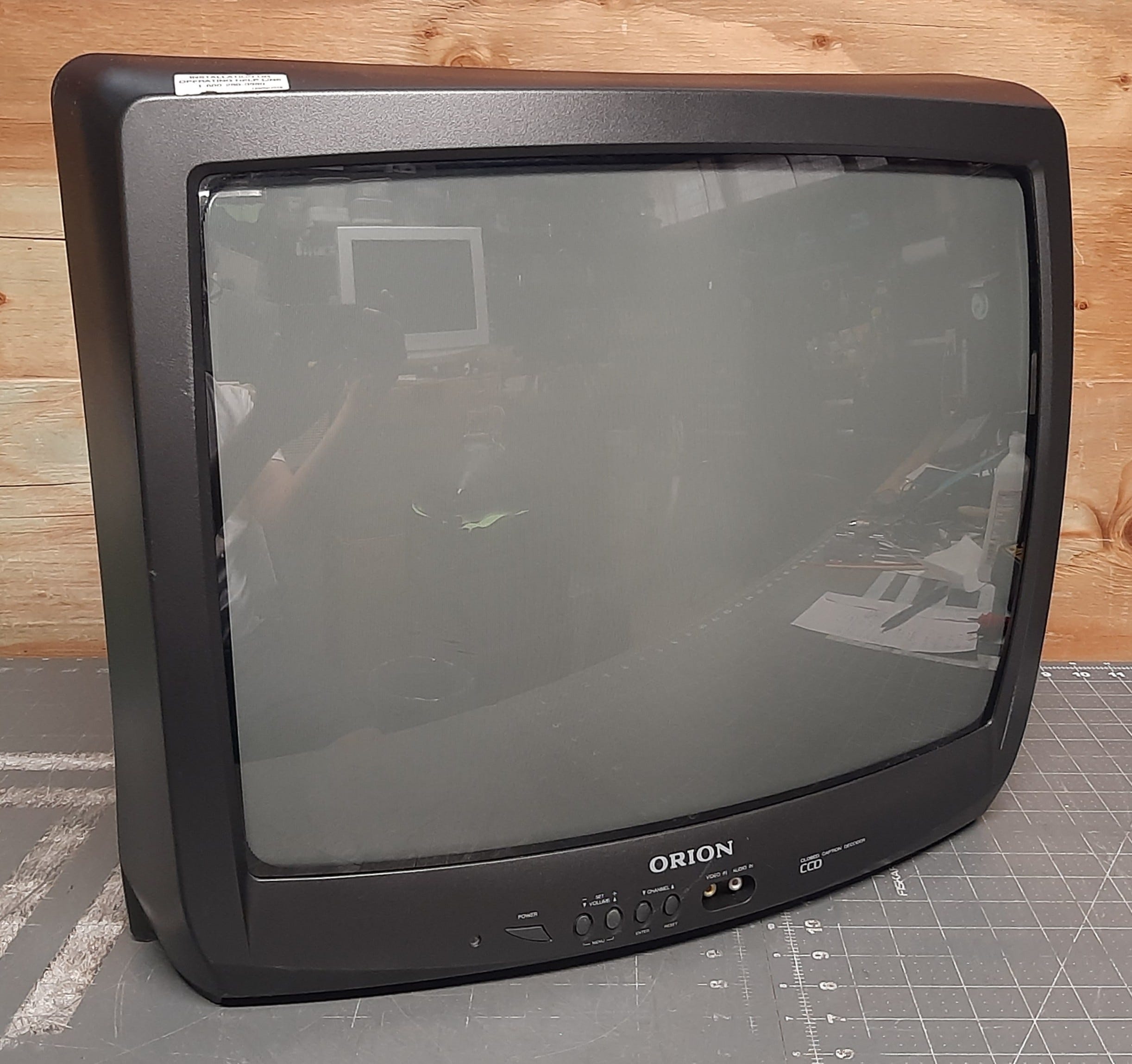
The cheapest color TV you could buy was an Orion—a Hungarian brand. It cost about as much as a TV would have in the U.S., whereas import taxes made a Japanese SONY, Finnish Nokia, or German Grundig quite a bit more expensive.
Orion TV1934B | CRT Database

It gave me a lesson in the folly of import substitution. It was just so inefficient for Hungarians to make TVs or Russians to pay Fiat to license an obsolete model from the 1960s. Likewise, the only way people would buy a U.S. made iPhone, which would come to about $3,500, would be if every competing device was taxed enough to make them more expensive too.

At least the domestic iPhone would be a desirable brand, though. I mentioned to people at work what TV I got and a couple said, with a slight look of concern: “Hmm, it’s probably okay.” Apparently a shortage of Japanese transistors had forced the company to substitute Soviet components that had caused several Orions to explode, but they figured mine was probably new enough that it wasn’t an issue. Other than the vague fear of burning down my apartment, and the fact that the remote control was a random series of tiny, unlabeled color buttons, it was a fine TV that I had for years.

Money was very tight for me initially as I had to pay American student loans on that modest salary. One way to save money was to buy something called “exploded chicken.” Unable to scrounge up enough hard currency, Russian importers had suddenly stopped buying certain Hungarian food products.

They don’t seem to have been discerning clients since one big poultry factory’s machinery was broken and they would just put cooked chicken with broken bones in a thick metal can with Cyrillic writing on it and sell as much of it as the former Soviet Union would take. It showed up in Hungarian markets and I think it cost about 40 cents. Artist’s impression of me in 1993:

As long as you didn’t mind picking out slivers, it was an okay dinner. I imagine tariffs that seem to change by the day will result in a few shortages in one part of the world and bargains elsewhere.

Free trade is underrated.

Travel

Balaton Memories

Growing up in the U.S., your idea of a beach vacation may have been sunny Florida or something more modest like The Jersey Shore. In communist Hungary, the nicest place to go was “Balaton.” It’s a lake, but no ordinary one as far as Hungarians, or the hundreds of thousands of East Germans who also vacationed there, were concerned. (it’s called “Plattensee” in German). Nearly 50 miles wide and eight or nine across, it was the equivalent of an ocean for a landlocked country where foreign travel rarely was possible.

Amphicarbalaton

I’ve been there a few times, but my most memorable visit by far was in August 1979, the summer between fourth and fifth grade. It was my first trip and I had been regaled with tales of how wonderful it was by my mom, who spent summers camping there as a “Young Pioneer.” By “memorable” I don’t mean pleasant, by the way, though that’s not her fault.

The three of us (me, my mom, and my sister) went there with my mom’s best friend from medical school and her daughter, who is my age. The whole trip was weird to an American kid — you went there on a slow, packed, stuffy train filled with people smoking harsh cigarettes. Passengers brought lots of food with them — bread, salami, cheese and juicy Hungarian peppers and tomatoes — no McDonald’s. Never ones for modesty, most Hungarians on the train already were half naked and ready to jump in the water. By the time they got to the actual beach, most of the women were truly naked from the waist up — an eye-opener for an American kid (I didn’t mind that part).

Instead of a hotel, most people, including us, rented a room or an entire house in a village near the shore. The one we rented seemed incredibly rustic to me — we had to feed the owners’ chickens — but it made for pretty luxurious digs by local standards. Anyway, the trip started out fine. We were on the southern, shallow side of the lake and I went swimming on the first afternoon. I remember having a nasty fall on the rocks and being carried out, sobbing, by a very kind East German teenager. It turned out to be my last excursion into the lake as I started feeling ill the following morning. We found out later that lots of people developed similar symptoms. In a communist country, this sort of information trickles out slowly, if at all.

I got worse and worse and I developed a high fever. I should note here that, back in Budapest before our trip, I had watched a popular Hungarian children’s film on TV based on a famous play called A Pál Utcai Fiúk (The Paul Street Boys) by Ferenc Molnár. In the end, the hero dies of a fever – typical, cheery Hungarian youth programming! Being nine years old and already a budding hypochondriac, I had visions of succumbing to my illness like the hero in the movie. At first my mom wanted to try a home remedy — chicken soup — but we couldn’t eat the live ones in the yard. She bought a duck instead and made some very greasy soup. It didn’t work and finally she found the lone local doctor.

Being the eastern bloc, this took a while and he had no medicine anyway. After scouring the area, my mom finally found some Bulgarian penicillin. I don’t want to sound bratty, but it was the most disgusting thing I’ve ever had to ingest — a bottle of poop-brown liquid with an aroma to match. I kept vomiting it up and, after a while, developed a Pavlovian reaction to the bottle, barfing as soon as she unscrewed the cap.

It was also really hot in the peasant house and I just lay in bed most of the day drenched in sweat. There was no ice or, of course, air conditioning. The main diversion was playing with the stray cats who wandered into the house and lay down in my bed. One day I picked up what looked like a glass of water on the table. It was actually vodka that my mom’s friend, who was a bit of a lush, was drinking straight.

I finally got so sick that my mom had to take me back to Budapest and call in a favor to get me treated in a “special” hospital. What was so special about it? I’m not sure, but I shudder to think of what the run-of-the-mill ones were like. A nurse took me into a room and pulled out the most gigantic needle I’ve ever seen — 1940s medical technology — to draw blood. She stuck it in my arm, but blood started spurting out all over me because she had neglected to place a glass tube on the other end. After yelling at me for not being “a man,” she found the missing piece and I was free to go.

They didn’t seem to have any normal penicillin either because I had to go back every day after that on a train, trolley, and bus while feeling awful to get a shot in my leg with a slightly smaller needle. After the shots my legs would stiffen and I had to limp back to the bus. They alternated sides each day. I was sick for the rest of our trip but a bit better than at the lake. When we got home, I went to the pediatrician in Queens, got some medicine, and it took me about a day to improve. I nearly had a fit when they asked to draw blood but was relieved when it was just a virtually painless finger prick. I had a bacterial infection.

They say that young children can’t appreciate being taken abroad. I’m not sure that’s quite true, though it may seem like that at the time. My sister and I didn’t really understand how different life was behind the Iron Curtain, even in Hungary, the “happiest barracks in the camp.” I thought lots of kids went on trips like that. I remember bringing back a “Pioneer” belt buckle with the inscription “Előre” (forward!) that I wore to school. They didn’t know quite what to make of it at P.S. 174.

Elore

This all made a strong impression on me — especially getting so sick and thinking, with my childish logic, that I might die of a fever. For lots of poor people in the world, that’s a distinct possibility.

I don’t want to scare anyone away from Balaton, by the way. It’s actually very nice and the water is perfectly clean now. It also has plenty of beautiful villas and some nicer hotels than back then, plus vineyards and spas. I went there twice when I lived in Hungary — once on a boozy weekend with some friends when we rented a cheap “Zimmer Frei,” Hungarian style, and once on a more high-end trip involving a sailboat with work colleagues. I had a pretty good time but, unlike probably 99.9% of people who went there as kids, my initial association with Balaton was unpleasant — feeling sick, scared, and uncomfortable.

Youthful memories leave an outsize imprint. My sons used to ask me when they were young if it was really “the best lake in the world.” Um, no, but that’s what their grandmother keeps telling them. She’s still lobbying for them to go there with her.

These days even middle class Hungarians are as likely to jet off to places like Corfu on cheap package tours as to spend time on Balaton. The analogy I would draw is New Yorkers who used to flock to the Catskills in the 1950s but now travel to Florida with the advent of air conditioning and affordable airfares. It’s not a perfect comparison. Balaton is special and accessible in a way that no similar place is for all Americans. It’s culturally significant enough to show up in many brands.

Going to Balaton may not quite rise to the level of a formative memory, but it’s a powerful one. I was inspired to write all this down after reading Gary Shteyngart’s wonderful memoir, Little Failure. He grew up near my neighborhood in Queens around the same time as me after emigrating from the Soviet Union, but the portion that got me reminiscing about my trip to Balaton was his description of summer beach vacations in Crimea. He also detailed some pretty medieval medical treatment he got for his asthma because Soviet doctors didn’t have modern inhalers.

I got off very lightly by comparison. Now all I have to do is become a bestselling author! Oh, one more thing. Sharp-eyed readers will notice that the postcard at the top of this entry shows not only Balaton but, for some strange reason, an Amphicar in the lake (I wrote about those a while back).

Uncategorized

My Mom Was a Billionaire

Here’s what that taught me

I’m the target of good-natured ribbing in my upper-middle-class New Jersey suburb for my spending habits. My wife’s friends told her they’ll pass on going on vacation with us because I’m too cheap and would probably take a bus from the airport, pack sandwiches, and stay at budget hotels.

Guilty as charged. That’s in part because both my mom and dad spent money like there was no tomorrow when they were kids. They had to–there was no time to waste. 

Without running water or medicine, hardly any food or clothing, and her father murdered by the Nazis, my mom was the poorer of my parents, but she managed to save a little bit of money in 1946, the year she turned five, to buy herself some candy. The banknote she had probably made her a local currency billionaire, yet it was literally worth less than the paper it was printed on by the time she was ready to spend it. My grandmother didn’t have the heart to tell her. With both of his parents still alive and the wisdom of being a decade older, my dad had a few more zeros on his net worth–not that it mattered much.

That was the insane reality in postwar Hungary. From time-to-time I’ve quizzed my colleagues in finance or journalism about which country had the highest inflation in history. They almost always guess Weimar Germany, Brazil, Zimbabwe, or, occasionally, early 1990s Yugoslavia. Nope.

In that fateful year Hungary’s inflation rate hit 41,900,000,000,000,000%. Not a year—a month. At the peak it took about 15 hours for prices to double. I once asked my grandmother how often she was paid and what she did with the money. Couldn’t she just throw it out the window on her lunch break for someone to buy groceries with it before they changed prices on her way home? She just smiled and shrugged. Nobody really wanted to hang on to cash so the main value of her job was that they fed her. She said that if you really needed medicine then the only way to get it was if you had a little bit of gold, which she didn’t.

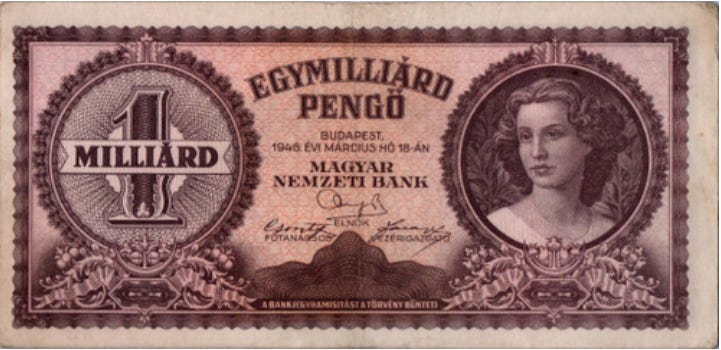
Here’s the sort of thing my mom might have had in her pocket–a billion pengő–though maybe it was just 10 million, or a million or a thousand, depending on exactly what month she set it aside. (Milliárd=billion in Hungarian).

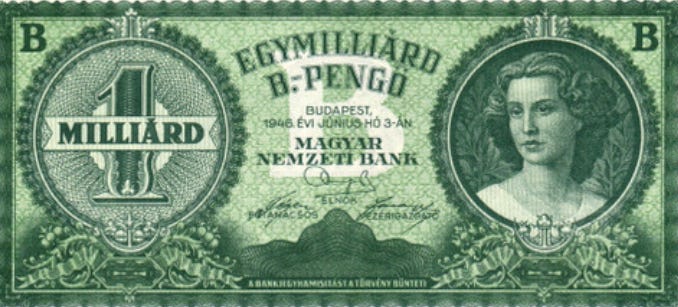
To keep things somewhat manageable, and to save scarce paper, old bills were printed over and reissued in denominations with nine zeros removed–the millpengő. That only lasted for several weeks, so then came the billpengő. (Billió=trillion).

Three months after the above bill was produced, the government printed, but never issued, a sextillion pengő note (one followed by 21 zeros). Then they gave up and scrapped the currency entirely, introducing the forint and making every pengő legally worthless. (I have almost the full collection of banknotes at home, but unfortunately not the rare specimen below, which is worth about $7,000 today to a collector).

Lots of people have parents who grew up poor. It usually makes you a bit frugal–no bad thing in moderation, though sometimes people don’t want to take trips with you 😢. But having almost no money and seeing money cease to have meaning are two entirely different things. To me, at least, those stories make any level of wealth or savings seem ephemeral.

It’s hard to imagine that in a country as blessed as the United States, the issuer of the world’s reserve currency. We have an “exorbitant privilege” compared with people whose wealth, salary, and future pensions are denominated in rubles, bolívars, dirhams, ringgits, pesos, reais, or, sadly, forints. Everything from the cars in our driveways to the appliances in our homes and smartphones in our pockets are more-likely-than-not procured from industrious foreigners who gladly accept electronic bits and bytes representing dollars. Since we don’t have as many useful things to sell them, the surplus is recycled into our financial system. Trillions of dollars are parked in Treasury bills, notes, and bonds earning hundreds of billions in interest annually. With a budget deficit of $1.8 trillion last fiscal year–the second biggest ever–the interest is effectively deferred, with no anxiety about it being paid.

You can read plenty of clickbait nonsense on the internet from doom-mongers comparing America’s fiscal future to Weimar Germany or Zimbabwe (they would cite Hungary if they or their readers were more aware of history). Things would have to go very, very wrong for that to happen.

But we certainly could get a whiff of it. I’m surprised how little my educated friends and neighbors question the solidity of our currency. It’s just a construct, backed by nothing but faith in America’s centrality to the world economy, the wisdom of its leaders, and its military might. 

My wife and I had dinner this past weekend with two couples who also just shipped their youngest child off to college this year. The conversation soon turned from roommates and majors to the next exciting stage in our lives after becoming empty-nesters: retirement. One dad is old enough to have started collecting Social Security. While he could have gotten more if he had waited longer, I pointed out that it probably made sense to start taking it now because the retirement trust fund could be depleted in nine years. That was news to him and the others, but it was sort of like someone telling them the sun will one day consume the earth in a supernova–the sort of weird, theoretical thing they expect to hear from the nerdy finance guy they know, not an actual concern.

One reason most people aware of that projection by the government’s actuaries also don’t take it seriously is that they assume the federal government will step in and cover any projected shortfall. Paid for with what, though? Even on the outright panglossian projections of the Congressional Budget Office, which foresees no recessions, wars, or crises ever, Social Security, Medicare, and other mandatory outlays will be more than $6 trillion in 2033.

Meanwhile, debt held by the public will have doubled by that year to almost $50 trillion on those benign assumptions, and just the annual interest bill is projected at $1.6 trillion. Yet the model concludes that sane people will lend Uncle Sam the money to cover that interest due plus a deficit approaching $3 trillion for just 3.5% a year. That’s less than the yield on any Treasury bill, note, or bond being sold today.

So will politicians double payroll taxes on people still working or tell retirees that they’re out of luck and that they need to accept a third less each month? Probably neither, but you might not love the alternative. It’s something not totally unlike what Hungary was forced to do in 1945 and 1946. While the economy won’t be in ruins (I hope), the U.S. has an active central bank, borrows in its own currency, and does have a printing press. They don’t even need to worry about issuing banknotes any more because money is mostly electronic. Buying bonds and keeping interest rates artificially below inflation, dubbed “financial repression,” is one indirect way of doing this.

Is that outlandish? Between the prospect of doubling or tripling taxes, what would you expect Washington to do? Taking a step so likely to spur inflation is in-and-of-itself a form of taxation and is dubbed “the cruelest tax” because it raises money from people who live on a fixed income.

Before you pore over the actuaries’ report about Social Security, that might not be the thing that breaks. A war, a financial crash, or another pandemic could all push us close to the precipice. Or it could be that the scales fall from our creditors’ eyes one day and interest rates start to rise on their own, forcing the Federal Reserve’s hand. There is some speculation that the moment is nigh, though that has been predicted prematurely many, many times.

None of this remotely means the dollar will go the way of the pengő, but seeing our savings lose a third or a half of their real purchasing power would be pretty lousy. I started off this note telling you how annoyingly frugal I am. If my fears about the fragility of our currency are justified then I’m doing the exact wrong thing. I should be living it up and accumulating possessions instead of saving as much as I can. 

If you see a new car in my driveway or hear that I’ve been flying business class and staying at The Four Seasons, that might be why. After all, I’m the child of billionaires.

career · investing · journalism

If the Man Wants a Purple Suit …

I’m in the process of clearing out my basement and, as dusty old boxes sometimes do, the contents of one took me on a trip down Memory Lane. They also made me think about a lesson I learned that investors would do well to understand today.

The artifacts were the lucite “deal toys” from various initial public offerings and secondaries I worked on as an equity analyst. These usually adorn the desk and then, as they get more senior, the office of any self-respecting investment banker. Lots of trophies made you a “big swinging dick.” Fighting my hoarder tendencies and my ego, I dumped them in the trash.

But there were three rectangular hunks of clear plastic in that box that I kept: my Institutional Investor awards. Back then at least, the best thing you could do for your career as an analyst was to be “II ranked” in that magazine’s annual survey of fund managers–coming in among the top three in a category. And if you were number one then the magazine would write a flattering blurb with anonymous quotes and a caricature artist would make a drawing of you as an athlete–football in the U.S. and soccer in Europe. Your face also was on the cover of the magazine. It figured heavily into your career prospects and bonus. Andy Kessler wrote a nice piece about it back in 2001 when I was still in the business.

As soon as I heard about this, I made it my goal to be on that magazine cover, and for three years in a row I was. Is that because I was so good at picking emerging market stocks? I suppose I was okay, but it really was a measure of how much clients liked and valued you. For most of them that meant how often you called, how ready you were to organize trips and entertainment for them, and how smart you made them feel. I remember hearing one of our large clients repeat almost verbatim to a bunch of his clients, a group of pension consultants–a rare peek for me at how that particular sausage was made–part of the presentation I had recently given him. He got a detail or two mixed up, but I don’t think they noticed.

But before my Institutional Investor glory and all those 90 hour weeks and client ass-kissing, pretty much exactly 30 years ago, I was wet behind the ears and, to quote Liar’s Poker, still “lower than whale shit on the bottom of the ocean floor” at dear-departed CS First Boston. Our then-largest client asked me about two Eastern European companies and I told him that I was pretty sure one was run by a crook and that the other one, despite being backed by some well-respected financiers, was headed for bankruptcy. Much to my surprise, the client wasn’t happy that I had shared this opinion with him and bought more of them instead of the stock that I recommended.

A salesman covering the account who had way more Wall Street experience than almost anyone on my team took me out to lunch in Budapest that summer of 1994 and clearly was exasperated at what a dummy I was. “Spencer, if the man wants a purple suit, sell him a purple suit.” In other words, we’re in the selling business. If someone wants to do something dumb then he’s a big boy so just make sure we’re the ones who get the fat commission.

I remember feeling like a little kid learning that there‘s no Santa Claus*, but he was absolutely right. One company went bankrupt and the CEO looted the other one. A competing analyst got quite a bit of attention for a brilliant exposé about him and his offshore dealings and I remember feeling envious–probably an indication of why I later went into financial journalism. But I made way more money than her in the business and got to be on those magazine covers, so there’s that.

Even after all these years, Wall Street isn’t so much in the advice as in the customer satisfaction business. Last week I saw one of my former Wall Street Journal colleagues, Eric Wallerstein, on CNBC. He was a brilliant financial scribe and I’m sure he’ll do really well in his new role as chief strategist at Yardeni Research. But in an interview on “Closing Bell,” Scott Wapner immediately gave him a hard time because the firm he had just joined hadn’t raised its S&P 500 target for the end of the year. The figure had already been reached after a torrid first half. Everyone else was doing it, and Eric said he still liked the market, so why not raise it?

The interaction tells you how un-serious financial media can be. First of all, if I remember correctly, Eric’s boss, Wall Street veteran Ed Yardeni, had set a 5,400 point target in 2023 when the S&P 500 was around 4,000, so he made a good call. But I’m pretty sure he doesn’t possess a crystal ball to tell you where an index, much less an individual stock, will be trading in six months. 

There’s nothing like a rapidly rising market to make people even more confident in stocks, though, so CNBC’s viewers were looking for a number to underpin their optimism. I hate to sound so dismissive of my former profession: Analysts and strategists work hard and do a lot of useful things, but spending thousands of hours writing hundreds of pages to tell people what they want to hear with a false degree of precision isn’t one of them. 

A prime example of the horse following the cart comes from the market’s now-favorite stock, Nvidia. If an analyst had been really, really smart then he or she might have guessed that AI chips would be worth their weight in gold and that Nvidia would get a lot more valuable. 

But last April, with the stock at $27.75, analysts’ price targets all clustered at or slightly above that level with the average target being 2.3% higher. There were no three-digit price targets (the stock has since split so I mean on the current number of shares). Any analyst who had stuck his or her neck out and said that would be a legend but probably would have been doing it to gain notoriety like Henry Blodget and his infamous “Amazon $400” call in 1998. Merrill Lynch soon fired its analyst covering Amazon and hired Blodget from second-tier broker CIBC Oppenheimer for a princely sum.** It isn’t worth the career risk of making a prediction like that for someone already working at a top firm. And if you are going to stick your neck out at a big bank, try to be an optimist. This week JPMorgan Chase dumped its strategist, Marko Kolanovic, described as “the biggest bear” on Wall Street for, among other things, missing the AI boom.

Back to Nvidia: Fast forward to last July and the price and the average target had jumped dramatically to $46.75 and $50.09. By this January those numbers were $61.53 and $67.45. In April it was $86.40 and $99.70, respectively, with analysts racing to keep up. At the end of June 2024 it was $125.83 and $129.01 with not a single “sell” recommendation out of 62 analysts polled by FactSet (55 “buy” or “overweight” and 7 “hold”).

Yes, good things have happened. No, it isn’t the case that any serious discounted cash flow model making good faith projections instead of looking at the stock price spit out exactly $28 last April and $128 today. That doesn’t mean the latter number can’t be right, or even too conservative, but it does tell you that analysts are watching the price rise and telling their customers what they want to hear. 

As another recently-departed WSJ colleague, Charley Grant, wrote as his swan song this past week, “No Nvidia in Your Portfolio? You’re Just Toast.” For both analysts and fund managers–the ones who pay them and vote in those surveys–not being on board has been career suicide. At the time of Charley’s article, Nvidia stock was up a whopping 149% year-to-date compared with 4.1% for the average S&P 500 stock so just missing that one name, or even worse some of the others lifted by AI mania, would devastate a fund manager’s relative returns. And forget about getting your caricature on that magazine cover if you insist Nvidia is really worth $50 a share and stick to your guns.

If you’re reading this and you aren’t paid a salary by Wall Street then take note: Your career isn’t at risk if you don’t own the latest hot thing. You might have one less thing to brag about to your friends, but don’t let groupthink or FOMO make you do something that leaves your spidey-senses tingling–you’ll be better off in the long run. The next time a well-paid investing professional makes a persuasive case for something that doesn’t feel or sound right to you, just picture this guy in your mind.

*I felt almost the same way a month into my current career as a journalist when I was told that it really didn’t matter if I wrote well since that isn’t what I get paid for.

**He was later banned from the securities industry for life.